


How Cerebral Folate Deficiency Affects Neurological Health and Development
Cerebral folate deficiency affects neurological health by impairing folate transport in the brain, leading to cognitive delays, learning difficulties, and motor issues. In children, it often causes developmental delays. Board-certified Dr. William J. Weirs, at COEM, specializes in diagnosing and treating this condition to support brain function. For more information, contact us today or schedule an appointment online. We are conveniently located at 7510 North Forest Drive North Charleston, SC 29420. Patients routinely fly in to be evaluated by COEM, as we serve patients nationally and internationally. Extensive and specialized lab testing is available.
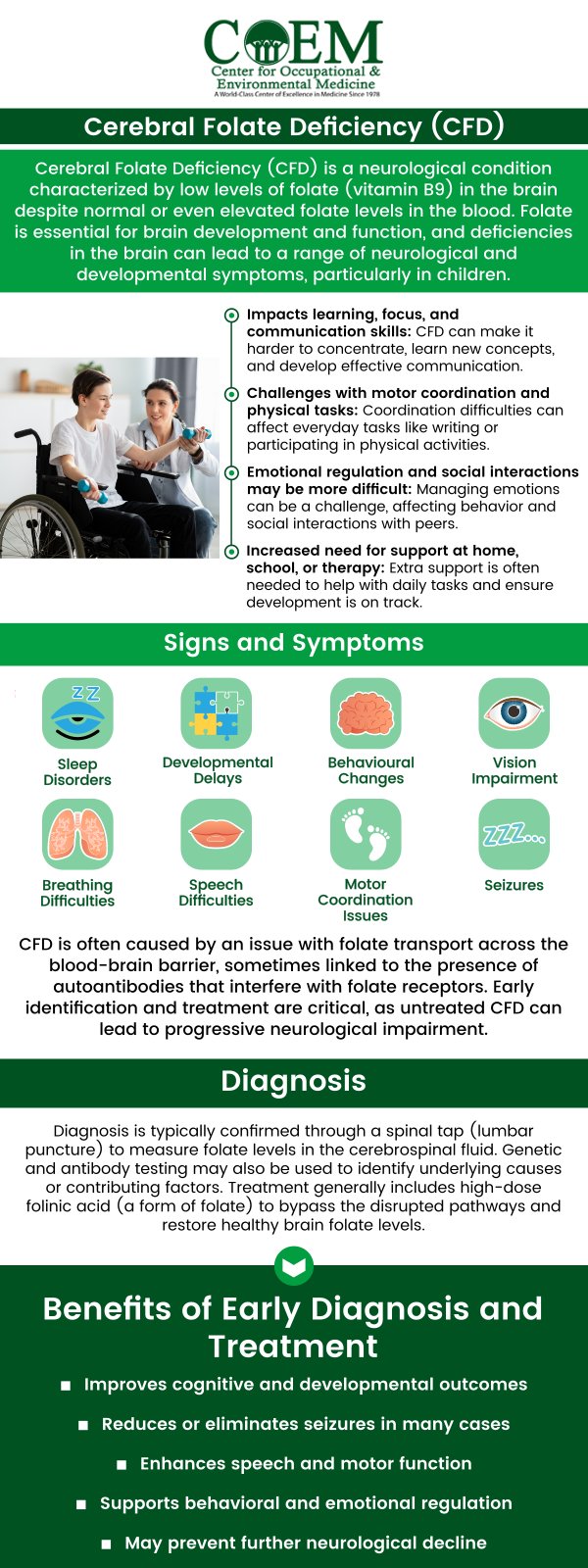
Table of Contents:
How does cerebral folate deficiency affect neurological health?
Is cerebral folate deficiency linked to other neurological disorders?
How is cerebral folate deficiency different from folate deficiency anemia?
Does cerebral folate deficiency affect motor skills development?
Cerebral folate deficiency affects neurological health by disrupting the availability of folate within the central nervous system, even when blood folate levels appear normal or elevated. Folate plays a direct role in neurotransmitter synthesis, myelination, and overall brain metabolism, all of which are essential for healthy neurological function. When folate transport into the brain is impaired, neural signaling becomes less efficient, and developmental processes may slow or fragment over time. Low folate levels within the brain can alter cognitive processing, attention, and memory formation. Individuals may experience difficulty sustaining focus, processing information, or adapting to new learning demands. In children, this disruption often presents as developmental delays that affect speech, learning progression, and problem-solving. Emotional regulation may also be affected as folate is closely involved in pathways that influence mood stability and stress response.
Over time, untreated cerebral folate deficiency can contribute to progressive neurological strain. Seizure activity, sleep disturbances, and sensory processing challenges may present as neural networks are unable to function efficiently. Early identification allows specialists to intervene before these effects become more entrenched, helping preserve neurological stability and support healthier long-term outcomes.
Cerebral folate deficiency has been associated with a range of neurological and neurodevelopmental conditions due to its impact on brain metabolism and immune regulation. Symptoms may overlap with conditions such as autism spectrum disorder, mitochondrial dysfunction, and certain seizure disorders, which can complicate diagnosis. Because folate is involved in energy production and neurotransmitter balance, disruption can mimic or exacerbate features of other neurological presentations. In some individuals, cerebral folate deficiency is linked to autoimmune activity involving folate receptor antibodies that interfere with folate transport across the blood-brain barrier. Genetic variations affecting folate metabolism or transport may also play a role. These underlying mechanisms can contribute to broader neurological vulnerability, particularly when combined with metabolic or immune stressors.
Specialists at The Center for Occupational and Environmental Medicine (COEM) carefully assess for overlapping conditions when cerebral folate deficiency is suspected. Comprehensive evaluation helps distinguish primary folate transport disruption from secondary neurological disorders, allowing treatment to be targeted rather than generalized.
Cerebral folate deficiency differs from folate deficiency anemia in both location and impact. Folate deficiency anemia reflects low folate levels in the bloodstream that impair red blood cell production, often resulting in fatigue and weakness. Whereas cerebral folate deficiency occurs when folate levels within the brain are low despite normal blood measurements, meaning standard blood tests may fail to detect the issue. Because cerebral folate deficiency primarily affects the nervous system, symptoms tend to be neurological rather than hematological. Cognitive delays, motor coordination challenges, and behavioral changes are more characteristic than anemia-related signs. This distinction is important to identify, as treating anemia alone does not address impaired folate transport into the brain.
Diagnosis of cerebral folate deficiency typically requires cerebrospinal fluid analysis through a spinal tap to measure levels of 5-methyltetrahydrofolate. Additional testing may include antibody assessment or genetic evaluation. Identifying this difference allows specialists at COEM in Charleston, SC, to pursue targeted therapy that comprehensively addresses the root cause of the deficiency.
Motor skill development is frequently affected in individuals with cerebral folate deficiency due to impaired neural communication and reduced energy availability within motor pathways. Children may exhibit delayed milestones, such as crawling or walking, and may struggle with fine motor coordination. Tasks requiring balance, coordination, or sustained muscle control may be particularly challenging. As development progresses, difficulties with handwriting, athletic participation, or precise movements may become more noticeable. These challenges can impact daily functioning and contribute to frustration or reduced confidence, especially in school or social environments.
Early intervention can help to significantly improve motor outcomes by restoring folate levels within the brain and supporting neural repair. Treatment often results in gradual gains in coordination, strength, and motor consistency. When addressed promptly, motor impairments related to cerebral folate deficiency may become more manageable and less disruptive over time.
Cerebral folate deficiency treatment is available at The Center for Occupational and Environmental Medicine (COEM). For more information, contact us today or schedule an appointment online. We are conveniently located at 7510 North Forest Drive North Charleston, SC 29420. We serve patients from Charleston SC, Mount Pleasant SC, Summerville SC, North Charleston SC, Goose Creek SC, Ladson SC, Hanahan SC, James Island SC, John’s Island SC, Daniel Island SC, West Ashley SC, Moncks Corner SC, Sullivans Island SC, Folly Beach SC, Isle of Palms SC and all of South Carolina, Nationally, and Internationally. Patients routinely fly into Charleston to be evaluated by COEM and to enjoy this beautiful city, which is a Condé Nast and Travel and Leisure Top Domestic and International Tourist Destination.

Check Out Our 5 Star Reviews


Additional Services You May Like
- Functional Medicine
- Allergy and Autoimmunity
- Asthma and COPD
- Autoimmune Diseases
- Allergy and Immunology
- Anti Aging Medicine
- Autism and Children
- ADHD
- Bacterial Infections
- Chemical Toxicity
- Candida Fungal Problems
- Cancer Treatment
- Chronic Illness
- Chronic Inflammatory Response Syndrome (CIRS)
- Chronic Fatigue
- Cardiovascular Disease
- Carbon Monoxide Poisoning
- Chelation Therapy
- Depression
- Environmental Medicine
- Ear Ringing and Dizziness
- Fatigue Treatment
- Fertility and Preconception Care
- Gut Health
- GI 360 Test
- Heavy Metal Toxicity
- Hormonal Imbalances
- Headaches and Migraines
- Hormone Balancing (Men & Women)
- Hepatitis
- Integrative Medicine
- Independent Medical Evaluations
- Influenza
- Lab Testing
- Mold Toxicity
- Malnutrition
- Neurodegenerative Disease
- Natural Hormone Balancing For Women
- Preservative-Free IV Therapy
- Stomach Acid Imbalance
- Smoking Cessation Program
- Skin Therapy (Anti-Aging)
- Swine Flu
- Thyroid
- Mold Toxicity
- Vitamin D
- Weight Loss Program
- Women’s Breast Health Formula
Additional Services You May Like
- Functional Medicine
- Allergy and Autoimmunity
- Asthma and COPD
- Autoimmune Diseases
- Allergy and Immunology
- Anti Aging Medicine
- Autism and Children
- ADHD
- Bacterial Infections
- Chemical Toxicity
- Candida Fungal Problems
- Cancer Treatment
- Chronic Illness
- Chronic Fatigue
- Cardiovascular Disease
- Chronic Inflammatory Response Syndrome (CIRS)
- Carbon Monoxide Poisoning
- Chelation Therapy
- Depression
- Environmental Medicine
- Ear Ringing and Dizziness
- Fatigue Treatment
- Fertility and Preconception Care
- Gut Health
- GI 360 Test
- Heavy Metal Toxicity
- Hormonal Imbalances
- Headaches and Migraines
- Hormone Balancing (Men & Women)
- Hepatitis
- Integrative Medicine
- Independent Medical Evaluations
- Influenza
- Lab Testing
- Mold Toxicity
- Malnutrition
- Neurodegenerative Disease
- Natural Hormone Balancing For Women
- Preservative-Free IV Therapy
- Stomach Acid Imbalance
- Smoking Cessation Program
- Skin Therapy (Anti-Aging)
- Swine Flu
- Thyroid
- Mold Toxicity
- Vitamin D
- Weight Loss Program
- Women’s Breast Health Formula



 VIP Referral
 Send Text
 How May I Help You?