


Understanding Autism Diagnosis in Adults
Autism diagnosis in adults focuses on identifying lifelong patterns in communication, behavior, and social interaction to better understand challenges with relationships, sensory sensitivities, and emotional regulation. At The COEM in Charleston, SC, our team provides compassionate and comprehensive assessments, helping adults gain clarity and access individualized care, resources, and long-term support. For more information, contact us today or schedule an appointment online. We are conveniently located at 7510 North Forest Drive North Charleston, SC 29420. Patients routinely fly in to be evaluated by COEM, as we serve patients nationally and internationally.
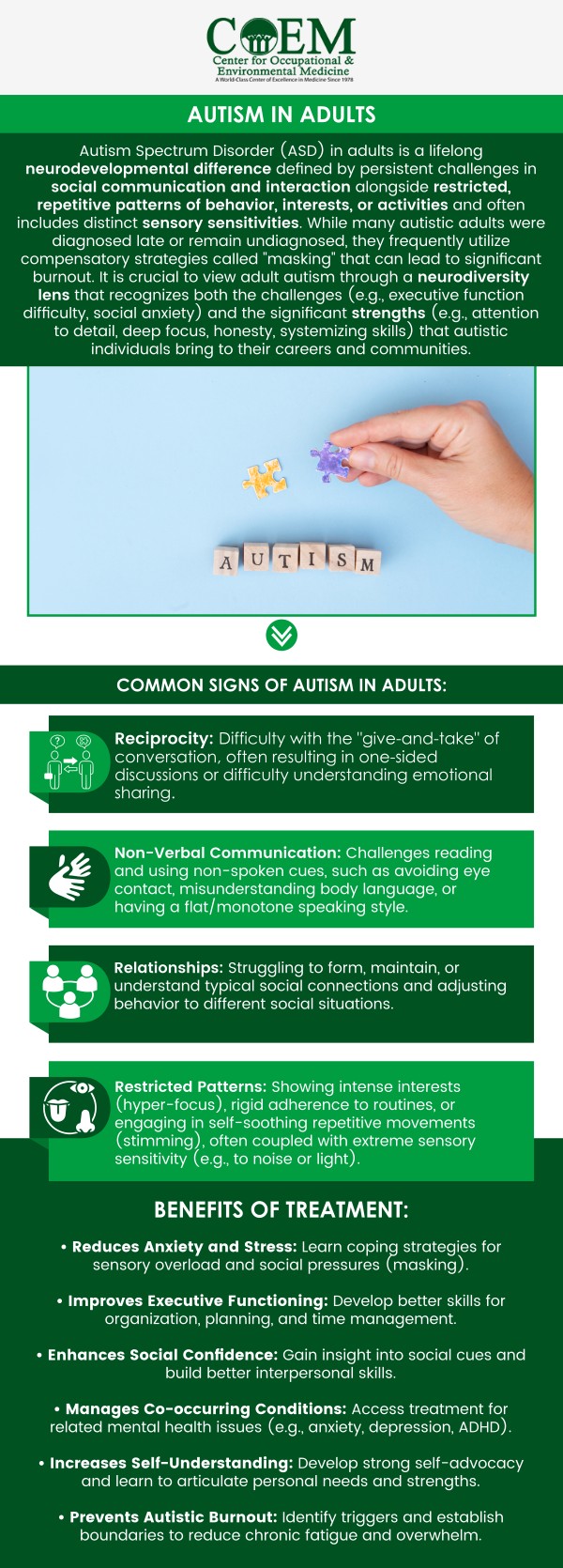
Table of Contents:
What is autism spectrum disorder (ASD) in adults?
How is autism diagnosed in adults?
What are common signs of autism in adults?
Why is autism often diagnosed later in adults?
Autism Diagnosis in Adults: Personalized Care at The COEM in Charleston, SC
Autism spectrum disorder in adults is a neurodevelopmental condition that shapes how an individual processes social information, sensory input, and internal patterns of thought. Many adults with ASD experience a lifelong tendency toward focused interests, predictable routines, and unique communication styles. The presentation in adults can be nuanced, with strengths in analytical thinking, problem solving, or attention to detail often existing alongside challenges in social interpretation or sensory regulation. Because adults have often created their own systems for navigating daily life, the core traits sometimes sit beneath well-developed coping strategies.
For many adults, ASD influences how they interpret subtleties in conversation, manage loud or unpredictable environments, and move through transitions that others might take for granted. Sensory overstimulation or difficulty shifting attention can also shape daily routines. These characteristics may appear understated to those who do not know the individual well, yet they often reflect a long history of adapting to the world through internal organization and patterned thinking.
The specialists at The Center for Occupational and Environmental Medicine (COEM) assess these patterns through a functional and developmental lens, acknowledging how ASD interacts with metabolism.
Autism diagnosis in adults involves a structured process that blends observational assessment, developmental history, and a detailed review of current functioning. Since adults often rely on long-standing compensation strategies, the diagnostic process examines both the outward behaviors and the internal experiences that shaped them. Clinicians look at communication patterns, social understanding, sensory responses, and repetitive or highly patterned interests to determine whether the traits align with ASD. This approach respects the reality that signs of autism may be subtle or masked, especially in individuals who learned to adjust their outward behavior over time.
A thorough developmental history is also essential, even when memories or past records are incomplete. Information about early milestones, childhood challenges, academic experiences, and longstanding behavioral tendencies helps clinicians understand whether traits have been consistent across the individual’s life. Standardized tools, interviews, and symptom inventories further clarify the presence of ASD characteristics. Functional medicine doctors at COEM in Charleston, NC, incorporate broader health assessments as well, since metabolic, immunological, and environmental factors can amplify or mimic certain traits.
Common signs of ASD in adults can include difficulty interpreting social cues, preferring predictable routines, and feeling overwhelmed by sensory environments. Many adults describe challenges with small talk or unstructured social situations, which can lead to exhaustion even when the interaction appears outwardly successful. A strong reliance on routine or internal structure may also be present, helping the individual maintain a sense of stability in daily life. These signs often reflect deeply ingrained coping patterns that supported the individual through childhood and into adulthood.
Sensory differences are another key feature. Loud noises, bright lights, or unexpected physical contact may trigger discomfort or an immediate need to withdraw, while certain textures or repetitive sensations can feel grounding. Adults with ASD may also have focused interests that they return to regularly, often with a depth of knowledge that reflects sustained engagement. Communication styles may differ as well, with some individuals relying on literal language or expressing thoughts in ways that feel more direct than others expect.
The board-certified functional medicine doctors at COEM identify these signs in consideration with stress, hormone patterns, environmental triggers, and other factors that may intensify autistic traits. Their assessments help individuals distinguish between ASD related patterns and responses shaped by medical or environmental influences. This comprehensive understanding offers a clearer picture of how autism manifests in adulthood and what supports will make day-to-day life more manageable.
Autism is often diagnosed later in adults because many individuals grew up during periods when awareness and diagnostic criteria were limited, particularly for those whose traits did not match stereotypical presentations. Adults who developed strong coping strategies often masked their symptoms by mimicking social behavior and avoiding environments that overwhelmed them.
In many cases, adults seek a diagnosis only after repeated challenges with workplace expectations, relationships, or sensory overwhelm lead them to look for deeper explanations. For some, a child’s diagnosis prompts reflection on their own history, revealing patterns they never had the language to describe. The mismatch between how others perceive them and how they experience the world internally can also drive a desire for clarity.
The team at COEM approaches adult autism evaluation with a depth of experience shaped by functional medicine and neurodevelopmental understanding. Their process looks beyond checklists and takes into account the individual’s medical history, environmental exposures, metabolic patterns, and developmental background. This comprehensive lens helps determine whether long-standing challenges with communication, sensory regulation, or executive functioning align with ASD or are influenced by other physiological factors that require attention.
Once specific patterns shaping an individual’s functioning are identified, the team develops a personalized plan that may incorporate nutritional strategies, metabolic support, targeted supplementation, or therapies that help regulate sensory and neurological responses. This approach recognizes that adults often carry years of accumulated stress from navigating the world without a diagnosis and supports both the physical and emotional aspects of that experience.
Patients travel to COEM from across the country because of its longstanding expertise in functional medicine and clinical understanding of complex neurodevelopmental presentations. At COEM, patients receive a thoughtful and comprehensive evaluation that respects the depth of their history and the individuality of their symptoms.
Autism treatment is available at The Center for Occupational and Environmental Medicine (COEM). For more information, contact us or schedule an appointment online. We are conveniently located at 7510 North Forest Drive North Charleston, SC 29420. We serve patients from Charleston SC, Mount Pleasant SC, Summerville SC, North Charleston SC, Goose Creek SC, Ladson SC, Hanahan SC, James Island SC, John’s Island SC, Daniel Island SC, West Ashley SC, Moncks Corner SC, Sullivans Island SC, Folly Beach SC, Isle of Palms SC and all of South Carolina, Nationally, and Internationally. Patients routinely fly into Charleston to be evaluated by COEM and to enjoy this beautiful city, which is a Condé Nast and Travel and Leisure Top Domestic and International Tourist Destination.

Check Out Our 5 Star Reviews


Additional Services You May Like
- Functional Medicine
- Allergy and Autoimmunity
- Asthma and COPD
- Autoimmune Diseases
- Allergy and Immunology
- Anti Aging Medicine
- Autism and Children
- ADHD
- Bacterial Infections
- Chemical Toxicity
- Candida Fungal Problems
- Cancer Treatment
- Chronic Illness
- Chronic Inflammatory Response Syndrome (CIRS)
- Chronic Fatigue
- Cardiovascular Disease
- Carbon Monoxide Poisoning
- Chelation Therapy
- Depression
- Environmental Medicine
- Ear Ringing and Dizziness
- Fatigue Treatment
- Fertility and Preconception Care
- Gut Health
- GI 360 Test
- Heavy Metal Toxicity
- Hormonal Imbalances
- Headaches and Migraines
- Hormone Balancing (Men & Women)
- Hepatitis
- Integrative Medicine
- Independent Medical Evaluations
- Influenza
- Lab Testing
- Mold Toxicity
- Malnutrition
- Neurodegenerative Disease
- Natural Hormone Balancing For Women
- Preservative-Free IV Therapy
- Stomach Acid Imbalance
- Smoking Cessation Program
- Skin Therapy (Anti-Aging)
- Swine Flu
- Thyroid
- Mold Toxicity
- Vitamin D
- Weight Loss Program
- Women’s Breast Health Formula
Additional Services You May Like
- Functional Medicine
- Allergy and Autoimmunity
- Asthma and COPD
- Autoimmune Diseases
- Allergy and Immunology
- Anti Aging Medicine
- Autism and Children
- ADHD
- Bacterial Infections
- Chemical Toxicity
- Candida Fungal Problems
- Cancer Treatment
- Chronic Illness
- Chronic Fatigue
- Cardiovascular Disease
- Chronic Inflammatory Response Syndrome (CIRS)
- Carbon Monoxide Poisoning
- Chelation Therapy
- Depression
- Environmental Medicine
- Ear Ringing and Dizziness
- Fatigue Treatment
- Fertility and Preconception Care
- Gut Health
- GI 360 Test
- Heavy Metal Toxicity
- Hormonal Imbalances
- Headaches and Migraines
- Hormone Balancing (Men & Women)
- Hepatitis
- Integrative Medicine
- Independent Medical Evaluations
- Influenza
- Lab Testing
- Mold Toxicity
- Malnutrition
- Neurodegenerative Disease
- Natural Hormone Balancing For Women
- Preservative-Free IV Therapy
- Stomach Acid Imbalance
- Smoking Cessation Program
- Skin Therapy (Anti-Aging)
- Swine Flu
- Thyroid
- Mold Toxicity
- Vitamin D
- Weight Loss Program
- Women’s Breast Health Formula



 VIP Referral
 Send Text
 How May I Help You?