


Where to Get PANS/PANDAS Treatment in Charleston, SC?
PANS (Pediatric Acute-onset Neuropsychiatric Syndrome) and PANDAS (Pediatric Autoimmune Neuropsychiatric Disorders Associated with Streptococcal Infections) are conditions that cause sudden onset of psychiatric symptoms in children, often triggered by infections or immune system dysfunction. At the Center for Occupational & Environmental Medicine (COEM) in Charleston, SC, our team offers specialized treatment for these disorders. For more information, contact us today or schedule an appointment online. We are conveniently located at 7510 North Forest Drive North Charleston, SC 29420. Patients routinely fly in to be evaluated by COEM, as we serve patients nationally and internationally.
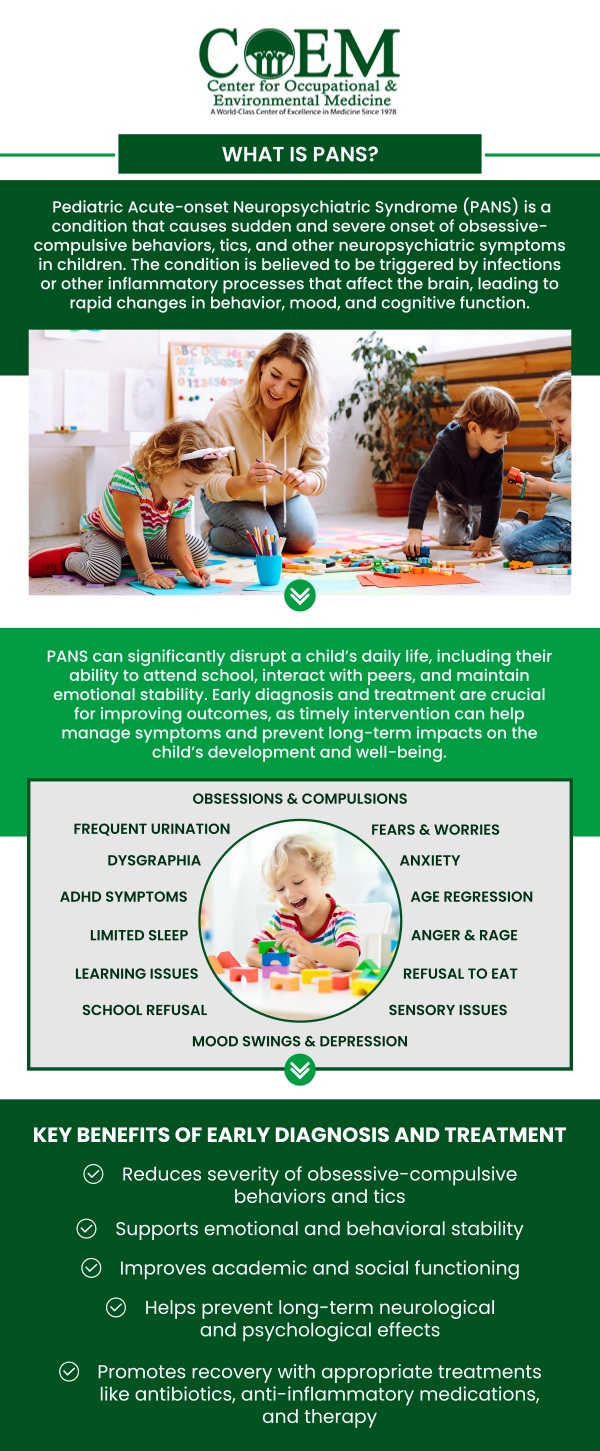
Table of Contents:
What are PANS and PANDAS, and how do they affect children?
What symptoms of PANS and PANDAS should parents watch for?
What causes PANS and PANDAS in children?
Why is early recognition of PANS and PANDAS important?
PANS and PANDAS are pediatric neuroimmune conditions involving a sudden and often dramatic shift in a child’s behavior, emotions, and cognitive functioning. PANS, or Pediatric Acute Onset Neuropsychiatric Syndrome, is a broader diagnosis describing abrupt neuropsychiatric symptoms that can follow infections or other immune stressors. PANDAS, or Pediatric Autoimmune Neuropsychiatric Disorders Associated with Streptococcal Infections, is considered a subset of PANS and is linked specifically to group A streptococcal infections.
In affected children, symptoms of these conditions tend to appear rapidly, sometimes over the course of days. This abrupt onset can disrupt daily life, altering mood, behavior, learning ability, and physical coordination in ways that feel unrecognizable to families. Obsessive-compulsive behaviors, motor or vocal tics, and intense anxiety are often among the earliest signs.
These syndromes are believed to involve an immune response that mistakenly targets areas of the brain involved in movement, behavior, and thought regulation. At The Center for Occupational and Environmental Medicine (COEM), PANS and PANDAS are carefully and comprehensively treated and evaluated by a team of multidisciplinary experts who consider the scope of the conditions and their symptoms.
Symptoms of PANS and PANDAS often center on a sudden behavioral or emotional change that contrasts significantly with a child’s prior functioning. Obsessive thoughts, compulsive rituals, or the rapid emergence of tics frequently raise early concern. These changes may appear alongside heightened anxiety, irritability, or emotional volatility that feels disproportionate or unfamiliar. In addition to these behavioral shifts, many children experience physical or neurological changes. Handwriting may worsen abruptly, sleep patterns may become disrupted, and urinary frequency or bedwetting can emerge without an obvious explanation. Some children develop restrictive eating patterns, joint pain, or unusual movements that interfere with coordination and daily tasks. Academic and social regression is also common. A child who previously functioned well in school may struggle with concentration, memory, or emotional regulation. At COEM, careful attention is given to the timing and clustering of symptoms, particularly when they escalate quickly and affect multiple areas of a child’s life at once.
PANS and PANDAS are commonly thought to stem from an abnormal immune response rather than direct infection of the brain itself. In the case of PANDAS, a streptococcal infection is believed to trigger the immune system to produce antibodies that mistakenly react with brain tissue. This autoimmune reaction can interfere with normal neurological signaling.
PANS follows a similar immune pattern but may be triggered by a wider range of infections or inflammatory stressors. Viral illnesses, bacterial infections, and other immune challenges have all been implicated. The shared factor is a dysregulated immune response that alters brain function rather than structural damage.
Because these conditions lack a single definitive diagnostic test, identifying the underlying trigger requires detailed medical history, laboratory evaluation, and clinical expertise. The specialists at COEM focus on uncovering contributing factors through comprehensive testing and individualized assessment alongside symptom evaluation.
Early recognition of PANS and PANDAS allows intervention to begin while symptoms are still in an acute or episodic phase. When left unaddressed, immune-driven neurological symptoms may become persistent, increasing the risk of long-term chronic challenges related to learning, emotional regulation, and social development. Timely care can help reduce symptom severity and duration, preventing these from becoming long-term concerns. Prompt evaluation also helps distinguish PANS and PANDAS from other conditions that may appear similar on the surface. Sudden onset is a defining feature, and recognizing that pattern can prevent misclassification as primary anxiety disorders, tic disorders, or behavioral conditions that follow a different timeline.
At COEM, early identification supports a more targeted treatment approach that addresses both immune dysfunction and neuropsychiatric symptoms. This integrated strategy can improve overall outcomes and help stabilize a child’s functioning across home, school, and social environments.
PANS/PANDAS treatment is available at The Center for Occupational and Environmental Medicine (COEM). For more information, contact us today or schedule an appointment online. We are conveniently located at 7510 North Forest Drive North Charleston, SC 29420. We serve patients from Charleston SC, Mount Pleasant SC, Summerville SC, North Charleston SC, Goose Creek SC, Ladson SC, Hanahan SC, James Island SC, John’s Island SC, Daniel Island SC, West Ashley SC, Moncks Corner SC, Sullivans Island SC, Folly Beach SC, Isle of Palms SC and all of South Carolina, Nationally, and Internationally. Patients routinely fly into Charleston to be evaluated by COEM and to enjoy this beautiful city, which is a Condé Nast and Travel and Leisure Top Domestic and International Tourist Destination.

Check Out Our 5 Star Reviews


Additional Services You May Like
- Functional Medicine
- Allergy and Autoimmunity
- Asthma and COPD
- Autoimmune Diseases
- Allergy and Immunology
- Anti Aging Medicine
- Autism and Children
- ADHD
- Bacterial Infections
- Chemical Toxicity
- Candida Fungal Problems
- Cancer Treatment
- Chronic Illness
- Chronic Inflammatory Response Syndrome (CIRS)
- Chronic Fatigue
- Cardiovascular Disease
- Carbon Monoxide Poisoning
- Chelation Therapy
- Depression
- Environmental Medicine
- Ear Ringing and Dizziness
- Fatigue Treatment
- Fertility and Preconception Care
- Gut Health
- GI 360 Test
- Heavy Metal Toxicity
- Hormonal Imbalances
- Headaches and Migraines
- Hormone Balancing (Men & Women)
- Hepatitis
- Integrative Medicine
- Independent Medical Evaluations
- Influenza
- Lab Testing
- Mold Toxicity
- Malnutrition
- Neurodegenerative Disease
- Natural Hormone Balancing For Women
- Preservative-Free IV Therapy
- Stomach Acid Imbalance
- Smoking Cessation Program
- Skin Therapy (Anti-Aging)
- Swine Flu
- Thyroid
- Mold Toxicity
- Vitamin D
- Weight Loss Program
- Women’s Breast Health Formula
Additional Services You May Like
- Functional Medicine
- Allergy and Autoimmunity
- Asthma and COPD
- Autoimmune Diseases
- Allergy and Immunology
- Anti Aging Medicine
- Autism and Children
- ADHD
- Bacterial Infections
- Chemical Toxicity
- Candida Fungal Problems
- Cancer Treatment
- Chronic Illness
- Chronic Fatigue
- Cardiovascular Disease
- Chronic Inflammatory Response Syndrome (CIRS)
- Carbon Monoxide Poisoning
- Chelation Therapy
- Depression
- Environmental Medicine
- Ear Ringing and Dizziness
- Fatigue Treatment
- Fertility and Preconception Care
- Gut Health
- GI 360 Test
- Heavy Metal Toxicity
- Hormonal Imbalances
- Headaches and Migraines
- Hormone Balancing (Men & Women)
- Hepatitis
- Integrative Medicine
- Independent Medical Evaluations
- Influenza
- Lab Testing
- Mold Toxicity
- Malnutrition
- Neurodegenerative Disease
- Natural Hormone Balancing For Women
- Preservative-Free IV Therapy
- Stomach Acid Imbalance
- Smoking Cessation Program
- Skin Therapy (Anti-Aging)
- Swine Flu
- Thyroid
- Mold Toxicity
- Vitamin D
- Weight Loss Program
- Women’s Breast Health Formula



 VIP Referral
 Send Text
 How May I Help You?