


High-Dose Vitamin C Therapy for Epstein-Barr Virus and Chronic Viral Infections
High-Dose Vitamin C Therapy is used as supportive care for Epstein-Barr Virus and chronic viral infections by helping support immune function, oxidative stress balance, inflammation regulation, and overall recovery. At COEM, our team approaches this therapy through a personalized functional medicine plan based on each patient’s health needs to support long-term immune resilience, energy, and wellness rather than provide a one-size-fits-all solution. For more information, contact us today or schedule an appointment online. We are conveniently located at 7510 North Forest Drive North Charleston, SC 29420. Patients routinely fly in to be evaluated by COEM, as we serve patients nationally and internationally.
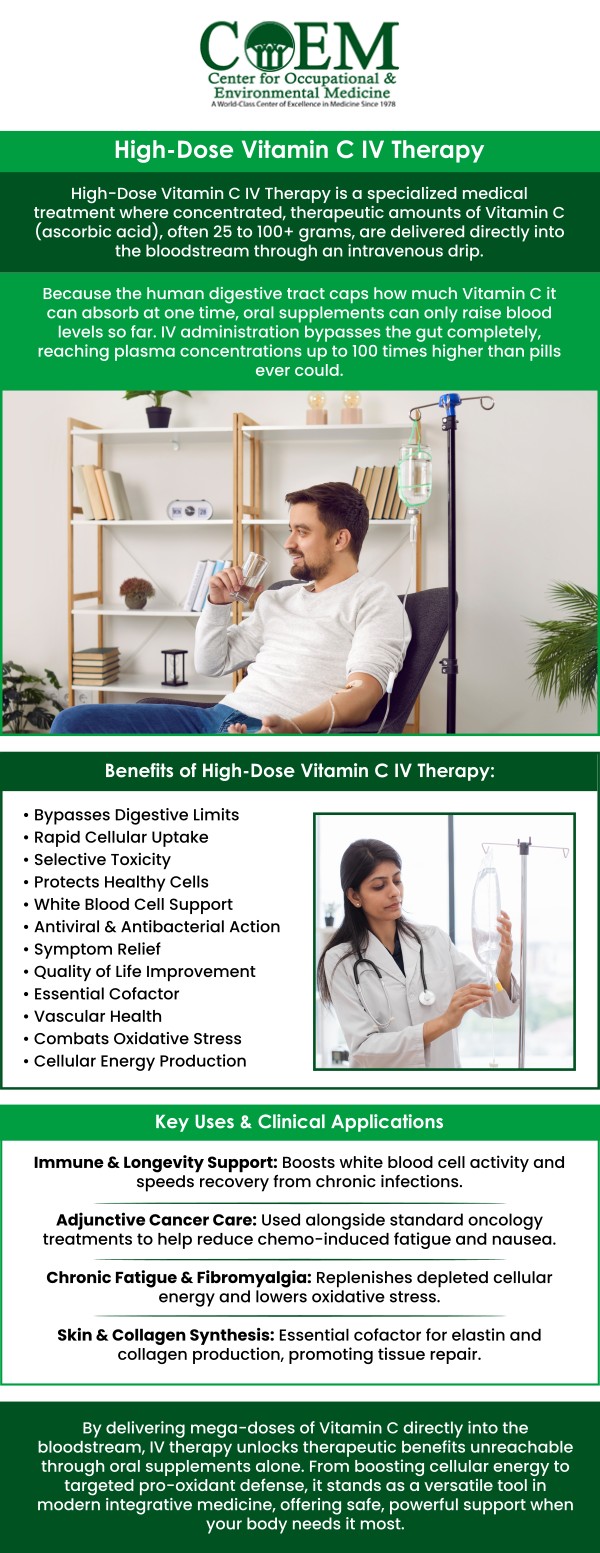
Table of Contents:
How does high-dose vitamin C specifically interact with and suppress the Epstein-Barr Virus?
Why is intravenous (IV) vitamin C used for chronic infections instead of standard oral supplements?
How are the dose and frequency of high-dose vitamin C therapy personalized for Epstein-Barr virus concerns?
How can high-dose vitamin C therapy be incorporated into a broader care plan for chronic viral infections?
High-Dose Vitamin C Therapy for Epstein-Barr Virus and Chronic Viral Infections in Charleston, SC at COEM
High-dose vitamin C is not best understood as a simple “virus killer,” but rather as a therapy that may support the body’s immune and antioxidant systems during Epstein-Barr Virus concerns. EBV can remain dormant in the body and may become more active when the immune system is stressed. Vitamin C plays an important role in immune cell function, oxidative stress balance, tissue repair, and inflammatory regulation, all of which may influence how the body responds to viral burden.
At higher intravenous concentrations, vitamin C may reach pharmacologic blood levels that are not typically achieved through standard oral intake. Some clinical discussions suggest that high-dose intravenous vitamin C may help support immune response and oxidative balance in patients with EBV-related concerns. However, response can vary, and EBV-related symptoms may also involve immune dysfunction, inflammation, nutrient depletion, hormone imbalance, sleep disruption, stress, or environmental triggers. For this reason, high-dose vitamin C is usually considered a supportive therapy within a broader clinical plan rather than a standalone cure for EBV.
Oral vitamin C can be helpful for general wellness, but the body tightly controls how much vitamin C is absorbed through the digestive tract. Once intake increases beyond what the gut can absorb, excess vitamin C is often eliminated. This means oral supplements may not create the same high blood concentrations that are possible through intravenous administration. For chronic infections or immune-related concerns, providers may consider IV vitamin C because it bypasses digestion and delivers vitamin C directly into the bloodstream.
Intravenous vitamin C may be used when the goal is to achieve higher, medically supervised levels for immune support, inflammation control, oxidative stress balance, and recovery support. This can be especially relevant for patients with digestive issues, poor nutrient absorption, chronic fatigue, inflammatory symptoms, or complex viral concerns. IV therapy should always be guided by a trained medical professional because higher-dose vitamin C may not be appropriate for everyone. Health history, kidney function, medication use, hydration status, and G6PD status may all be reviewed before therapy is considered.
The dose and frequency of high-dose vitamin C therapy are personalized based on the patient’s health history, symptom pattern, tolerance, clinical goals, and overall immune status. EBV-related concerns can look different from person to person. One patient may mainly experience fatigue and brain fog, while another may struggle with swollen glands, recurrent flares, inflammation, poor recovery, or overlapping chronic illness. Because of this variation, vitamin C therapy should not be approached with a one-size-fits-all protocol.
Personalization may also consider nutrient status, inflammatory burden, oxidative stress, kidney health, hydration, medications, and whether the patient has conditions that require extra caution. Providers may begin conservatively and adjust the plan based on how the patient responds. The goal is to support immune function without overwhelming the body. High-dose vitamin C may be combined with nutrition support, sleep optimization, stress reduction, gut health care, targeted nutrients, and other therapies when appropriate. This broader approach helps address the terrain that may allow EBV-related symptoms to persist.
High-dose vitamin C therapy may be incorporated into a broader care plan for chronic viral infections by supporting immune resilience, reducing oxidative stress, and helping the body manage inflammation. Chronic viral concerns are often more complex than the presence of a virus alone. Symptoms may be influenced by poor sleep, nutrient deficiencies, chronic stress, gut imbalance, toxic exposures, hormone changes, mitochondrial dysfunction, or immune dysregulation. Because of this, IV vitamin C is generally used as one supportive tool within a larger functional health strategy.
A broader care plan may include personalized nutrition, hydration, sleep support, stress management, gentle movement, gut health support, detoxification support when appropriate, and targeted nutrient therapy. For EBV and other chronic viral concerns, the goal is to strengthen the body’s ability to regulate immune activity and recover more efficiently. High-dose vitamin C may help support this process, but it should be guided by medical oversight and adjusted to the individual. A comprehensive plan can help address both viral burden and the underlying imbalances that may contribute to chronic fatigue, inflammation, brain fog, and reduced resilience.
At The Center for Occupational and Environmental Medicine (COEM), high-dose Vitamin C therapy for Epstein-Barr Virus and chronic viral infections in Charleston, SC is approached as part of a medically guided, whole-body care plan. Epstein-Barr Virus concerns may be associated with lingering fatigue, immune stress, inflammation, brain fog, poor recovery, and reduced resilience. High-dose IV Vitamin C may help support immune function, oxidative stress balance, and inflammation regulation, but it should be viewed as supportive care rather than a standalone cure.
COEM uses a functional medicine approach to help patients understand the broader factors that may contribute to chronic viral symptoms, including nutrient depletion, sleep disruption, stress burden, gut health, environmental exposures, and immune imbalance. Care is personalized to the individual’s health history, symptoms, and overall wellness goals. When appropriate, high-dose Vitamin C therapy may be combined with nutrition support, lifestyle guidance, targeted supplementation, and other supportive strategies to help strengthen the body’s natural recovery process and long-term immune resilience. For more information, contact us today or schedule an appointment online. We are conveniently located at 7510 North Forest Drive North Charleston, SC 29420. We serve patients from Charleston SC, Mount Pleasant SC, Summerville SC, North Charleston SC, Goose Creek SC, Ladson SC, Hanahan SC, James Island SC, John’s Island SC, Daniel Island SC, West Ashley SC, Moncks Corner SC, Sullivans Island SC, Folly Beach SC, Isle of Palms SC and all of South Carolina, Nationally, and Internationally. Patients routinely fly into Charleston to be evaluated by COEM and to enjoy this beautiful city, which is a Condé Nast and Travel and Leisure Top Domestic and International Tourist Destination.

Check Out Our 5 Star Reviews


Additional Services You May Like
- Functional Medicine
- Allergy and Autoimmunity
- Asthma and COPD
- Autoimmune Diseases
- Allergy and Immunology
- Anti Aging Medicine
- Autism and Children
- ADHD
- Bacterial Infections
- Chemical Toxicity
- Candida Fungal Problems
- Cancer Treatment
- Chronic Illness
- Chronic Inflammatory Response Syndrome (CIRS)
- Chronic Fatigue
- Cardiovascular Disease
- Carbon Monoxide Poisoning
- Chelation Therapy
- Depression
- Environmental Medicine
- Ear Ringing and Dizziness
- Fatigue Treatment
- Fertility and Preconception Care
- Gut Health
- GI 360 Test
- Heavy Metal Toxicity
- Hormonal Imbalances
- Headaches and Migraines
- Hormone Balancing (Men & Women)
- Hepatitis
- Integrative Medicine
- Independent Medical Evaluations
- Influenza
- Lab Testing
- Mold Toxicity
- Malnutrition
- Neurodegenerative Disease
- Natural Hormone Balancing For Women
- Preservative-Free IV Therapy
- Stomach Acid Imbalance
- Smoking Cessation Program
- Skin Therapy (Anti-Aging)
- Swine Flu
- Thyroid
- Mold Toxicity
- Vitamin D
- Weight Loss Program
- Women’s Breast Health Formula
Additional Services You May Like
- Functional Medicine
- Allergy and Autoimmunity
- Asthma and COPD
- Autoimmune Diseases
- Allergy and Immunology
- Anti Aging Medicine
- Autism and Children
- ADHD
- Bacterial Infections
- Chemical Toxicity
- Candida Fungal Problems
- Cancer Treatment
- Chronic Illness
- Chronic Fatigue
- Cardiovascular Disease
- Chronic Inflammatory Response Syndrome (CIRS)
- Carbon Monoxide Poisoning
- Chelation Therapy
- Depression
- Environmental Medicine
- Ear Ringing and Dizziness
- Fatigue Treatment
- Fertility and Preconception Care
- Gut Health
- GI 360 Test
- Heavy Metal Toxicity
- Hormonal Imbalances
- Headaches and Migraines
- Hormone Balancing (Men & Women)
- Hepatitis
- Integrative Medicine
- Independent Medical Evaluations
- Influenza
- Lab Testing
- Mold Toxicity
- Malnutrition
- Neurodegenerative Disease
- Natural Hormone Balancing For Women
- Preservative-Free IV Therapy
- Stomach Acid Imbalance
- Smoking Cessation Program
- Skin Therapy (Anti-Aging)
- Swine Flu
- Thyroid
- Mold Toxicity
- Vitamin D
- Weight Loss Program
- Women’s Breast Health Formula



 VIP Referral
 Send Text
 How May I Help You?