


Perimenopause and Menopause Symptoms and Treatment in Charleston, SC
Perimenopause and menopause are natural stages in a woman’s life that can bring about a range of physical and emotional changes. Symptoms such as hot flashes, irregular periods, mood swings, and sleep disturbances are common during this time. At The COEM, our team offers specialized treatments to help manage these symptoms and support women through this important phase of life. For more information, contact us today or schedule an appointment online. We are conveniently located at 7510 North Forest Drive North Charleston, SC 29420. Patients routinely fly in to be evaluated by COEM, as we serve patients nationally and internationally. Find out if you have been exposed, extensive lab testing is available.
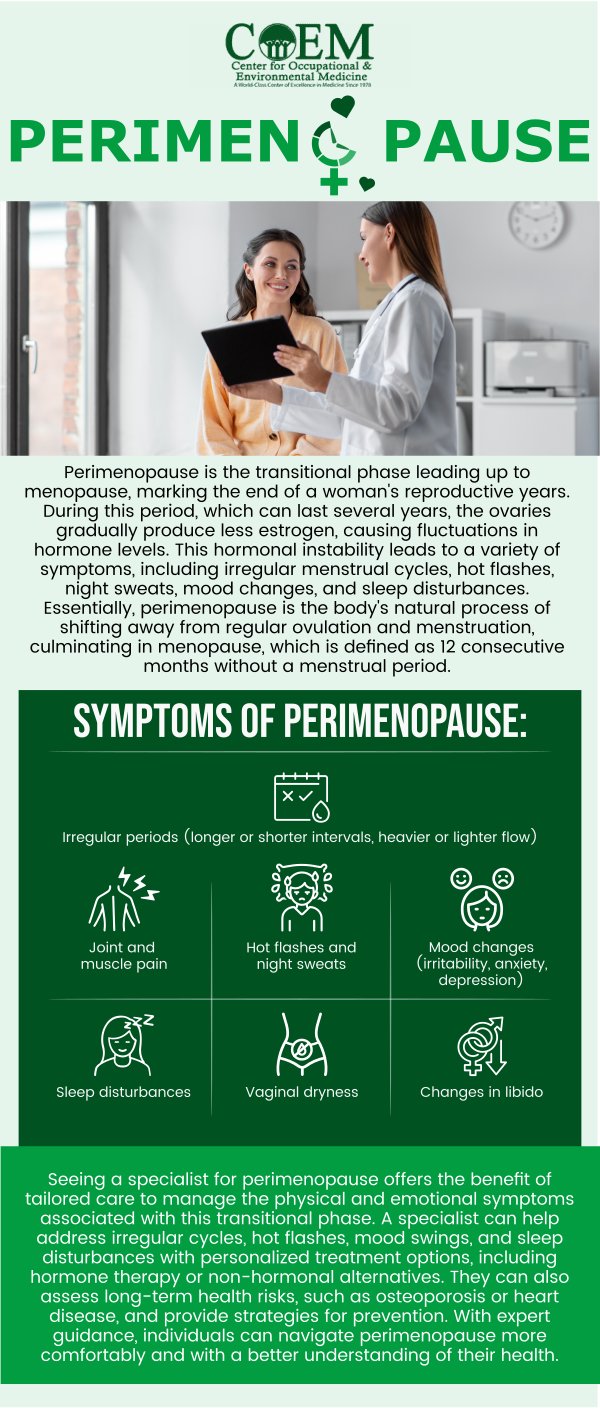
Table of Contents:
What is the difference between perimenopause and menopause?
What are the early signs of perimenopause?
How long does perimenopause typically last before menopause begins?
What are the common symptoms of menopause?
When should I see a doctor about perimenopausal or menopausal symptoms?
Understanding Menopause: The Change of Life with Dr. William J. Weirs at COEM in Charleston, SC
Managing Perimenopause and Menopause with Dr. William J. Weirs at COEM in Charleston, SC
Perimenopause is the transitional stage when the ovaries begin to slow hormone production and menstrual cycles become less predictable. This period often occurs gradually, with shifts in estrogen and progesterone creating changes in energy, mood, and physical rhythm before cycles end. Menopause occurs once a full twelve month time period passes without a menstrual cycle and without pregnancy. During perimenopause, hormone levels tend to fluctuate. Irregular cycles, changes in flow and cycle length, and changes in sleep or concentration are common early indicators that the body is adjusting. Menopause is when ovulation has ceased entirely and the hormonal pattern stabilizes at a new baseline.
At The Center for Occupational and Environmental Medicine (COEM), specialists provide tailored perimenopause and menopause care. Considering each patient’s symptoms and overall health history to distinguish where they are in this process. Hormonal assessments, thyroid evaluation, and a broader functional view of metabolism help determine whether an individual is in the transitional phase or has reached menopause.
Many women suffer in silence or embarrassment during these hormonal changes and often feel dismissed by providers who fail to recognize or treat perimenopause and menopause effectively. At COEM, board-certified functional medicine doctor Dr. William J. Weirs listens carefully, offering compassion, understanding, and actionable solutions. He helps women find the clarity and support they need to navigate these milestones with confidence and renewed vitality.
The earliest signs of perimenopause often appear as subtle shifts in the menstrual cycle, such as irregular timing, lighter or heavier flow, or unexpected spacing between cycles. Many individuals also notice changes in sleep patterns that come and go without a clear trigger, along with brief moments of warmth or flushing. Emotional patterns may shift as well, with mood changes or irritability. Some individuals may experience periods of forgetfulness or difficulty staying mentally organized during this phase, likely due to fluctuating hormone levels influencing neurotransmitter function. Physical symptoms such as breast tenderness, headaches, or changes in energy may also occur as the body adjusts to irregular hormonal rhythms.
At COEM, Dr. William J. Weirs carefully monitors these early changes. By identifying the onset of perimenopause early, they can provide targeted support through detailed hormone testing, thyroid assessments, and functional evaluations that reveal how symptoms fit within the broader context of each patient’s physiology.
Perimenopause can last for several years, with most individuals experiencing a transition that ranges from four to eight years before menopause officially begins. The length depends on how quickly hormone production declines and how the body adapts to those shifts. Some may move through the phase more quickly, while others remain in the transitional stage for a longer period with intermittent symptoms. During this period, individuals may have stretches of relative stability followed by months where symptoms become more noticeable. Cycles may become irregular and then normalize briefly before shifting again. The duration is influenced by the body’s individual natural adjustment process, with factors such as metabolism, stress patterns, lifestyle factors, and overall health influencing outcomes.
Dr. Weirs works together to help patients understand the unique rhythm of their transition, combining hormone analysis, thyroid evaluation, and metabolic assessment to create strategies that promote balance and ease during this stage of life.
Menopause is associated with a collection of physical and emotional symptoms that appear once hormone levels settle at a lower, consistent range. Hot flashes and night sweats are among the most common symptoms, often presenting as sudden episodes of heat that come without warning and vary in intensity from day to day. Sleep can become disrupted, which may contribute to changes in energy and cognitive sharpness. Many individuals also notice shifts in metabolism and weight distribution as the body adapts to the new hormonal landscape. Mood changes can also occur during menopause, including irritability, sadness, or difficulty staying emotionally steady. Some individuals also describe changes in libido or discomfort due to vaginal dryness as estrogen levels decline. Forgetfulness or inconsistent concentration may be part of the picture as well, particularly during the first few years after menstruation ceases.
The physicians at COEM in Charleston, SC, bring advanced functional and integrative perspectives to understanding these symptoms. Their expertise in hormonal, metabolic, and thyroid evaluation helps patients uncover the deeper causes of their changes. Through comprehensive testing and individualized care, they support patients with personalized strategies that reinforce sleep, energy, cognitive clarity, and long-term hormonal balance.
It’s never too early to see a doctor if you are concerned about perimenopausal or menopausal symptoms. It becomes imperative to seek care when symptoms begin interfering with daily routines, emotional stability, or overall well-being, or when menstrual patterns shift in ways that are significantly different from past cycles. Irregular bleeding can be part of perimenopause, but bleeding that is unusually heavy, extremely frequent, or occurs after menopause warrants prompt evaluation. Persistent hot flashes that disturb sleep or undermine energy levels may also indicate that additional support would be helpful.
At The Center for Occupational and Environmental Medicine in Charleston, SC, Dr. Weirs provides compassionate, individualized evaluations for women at every stage of this transition. His approach includes advanced hormonal panels, thyroid and metabolic testing, and a thorough review of medical history. He takes the time to listen and collaborate, helping each patient develop a plan that supports emotional balance, physical well-being, and confidence through this phase of life.
The good news about menopause is this: no more periods. The bad news is this: in place of the periods often come hot flashes, night sweats, mood swings, brain fog, forgetfulness, sleeplessness, and weight gain.
The medical definition of menopause is the cessation of menstrual bleeding for one full year. However, many use the term more broadly to describe the years before and after this milestone. Symptoms of this “Change of Life” can begin months or even years before the final menstrual cycle and may persist afterward as the body adjusts to a new hormonal balance.
What causes menopause?
The root cause of menopause is hormone decline. As the ovaries reduce production of estrogen and progesterone—usually around age fifty or fifty-one—women begin to experience the hallmark symptoms of perimenopause and, eventually, menopause. These hormonal changes are natural but can significantly affect physical, emotional, and cognitive well-being.
What causes hot flashes and night sweats?
While estrogen and progesterone do not directly control body temperature, they influence the hormones that do. When these levels fall or become unbalanced, the body’s temperature regulation system becomes unstable, leading to sudden episodes of heat or sweating. Some women experience only mild warmth, while others face frequent or intense hot flashes that disrupt sleep and daily comfort.
Is weight gain inevitable?
No, weight gain isn’t inevitable—but it can be more challenging to maintain a healthy weight during and after menopause. As estrogen levels decline, metabolism slows, fat distribution shifts, and muscle mass decreases. At the same time, other hormones like testosterone, growth hormone, and DHEA may also drop, reducing the body’s ability to burn fat efficiently. When estrogen dominance develops—meaning estrogen remains high relative to progesterone—it can slow thyroid function, making weight management even more difficult.
Why the mood swings and brain fog?
Hormone fluctuations can deeply influence mood and mental clarity. Progesterone naturally helps calm the nervous system and ease anxiety, while estrogen supports serotonin and cognitive function. As levels change, women may experience irritability, sadness, tearfulness, or difficulty concentrating. These symptoms are common but can be effectively managed through individualized care that restores hormonal balance and supports neurological health.
Are there other important things to know?
Yes—balanced hormones affect more than reproductive health. Healthy estrogen and progesterone levels can protect against heart disease, osteoporosis, and certain cognitive disorders. Not all estrogens act the same; some are protective, while others may increase breast cancer risk. Through detailed testing and careful monitoring, Dr. William J. Weirs helps guide estrogen metabolism safely and optimally for long-term wellness.
What about hormone replacement therapy (HRT)? Is it safe?
There is a key difference between traditional synthetic hormone therapies and Bioidentical Hormone Replacement Therapy (BHRT). BHRT uses hormones identical to those naturally produced by the body, allowing for more precise and physiologic balance. When prescribed and monitored appropriately, BHRT can safely and effectively reduce symptoms while supporting cardiovascular, bone, and cognitive health.
What does testing and monitoring involve?
Accurate testing is the cornerstone of effective hormone management. While blood tests provide only a snapshot, comprehensive urine testing gives a complete picture of how hormone levels fluctuate throughout the day. At The Center for Occupational and Environmental Medicine in Charleston, SC, Dr. William J. Weirs utilizes advanced hormone panels to evaluate estrogen, progesterone, thyroid, and adrenal function. This data-driven approach allows him to create personalized treatment plans that restore hormonal balance, improve energy, and enhance overall quality of life.
Board-Certified Dr. William J. Weirs, MD, approaches perimenopause and menopause through a deeply individualized functional medicine model that considers the full complexity of each woman’s health journey. His evaluations extend beyond isolated hormone levels to include thyroid function, adrenal balance, nutrient status, and environmental factors that may intensify symptoms. Treatment strategies often include dietary guidance, lifestyle modification, targeted supplementation, and, when appropriate, bioidentical hormone replacement therapy designed to restore stability and vitality.
Many women who visit COEM share that they previously felt unheard or dismissed when discussing their hormonal changes. Dr. Weirs takes a different approach—listening carefully, validating each patient’s experiences, and empowering them with knowledge and personalized solutions. His commitment to restoring balance allows patients to move through perimenopause and menopause with renewed confidence, improved energy, and emotional steadiness.
Patients come to COEM from across South Carolina and worldwide because of the clinic’s reputation for excellence in functional and environmental medicine. Dr. Weirs provides comprehensive, compassionate care that helps women embrace this stage of life as an opportunity for renewal rather than decline.
Perimenopause and menopause treatment is available at The Center for Occupational and Environmental Medicine (COEM). For more information, contact us today or schedule an appointment online. We are conveniently located at 7510 North Forest Drive North Charleston, SC 29420. We serve patients from Charleston SC, Mount Pleasant SC, Summerville SC, North Charleston SC, Goose Creek SC, Ladson SC, Hanahan SC, James Island SC, John’s Island SC, Daniel Island SC, West Ashley SC, Moncks Corner SC, Sullivans Island SC, Folly Beach SC, Isle of Palms SC and all of South Carolina, Nationally, and Internationally. Patients routinely fly into Charleston to be evaluated by COEM and to enjoy this beautiful city, which is a Condé Nast and Travel and Leisure Top Domestic and International Tourist Destination.

Check Out Our 5 Star Reviews


Additional Services You May Like
- Functional Medicine
- Allergy and Autoimmunity
- Asthma and COPD
- Autoimmune Diseases
- Allergy and Immunology
- Anti Aging Medicine
- Autism and Children
- ADHD
- Bacterial Infections
- Chemical Toxicity
- Candida Fungal Problems
- Cancer Treatment
- Chronic Illness
- Chronic Inflammatory Response Syndrome (CIRS)
- Chronic Fatigue
- Cardiovascular Disease
- Carbon Monoxide Poisoning
- Chelation Therapy
- Depression
- Environmental Medicine
- Ear Ringing and Dizziness
- Fatigue Treatment
- Fertility and Preconception Care
- Gut Health
- GI 360 Test
- Heavy Metal Toxicity
- Hormonal Imbalances
- Headaches and Migraines
- Hormone Balancing (Men & Women)
- Hepatitis
- Integrative Medicine
- Independent Medical Evaluations
- Influenza
- Lab Testing
- Mold Toxicity
- Malnutrition
- Neurodegenerative Disease
- Natural Hormone Balancing For Women
- Preservative-Free IV Therapy
- Stomach Acid Imbalance
- Smoking Cessation Program
- Skin Therapy (Anti-Aging)
- Swine Flu
- Thyroid
- Mold Toxicity
- Vitamin D
- Weight Loss Program
- Women’s Breast Health Formula
Additional Services You May Like
- Functional Medicine
- Allergy and Autoimmunity
- Asthma and COPD
- Autoimmune Diseases
- Allergy and Immunology
- Anti Aging Medicine
- Autism and Children
- ADHD
- Bacterial Infections
- Chemical Toxicity
- Candida Fungal Problems
- Cancer Treatment
- Chronic Illness
- Chronic Fatigue
- Cardiovascular Disease
- Chronic Inflammatory Response Syndrome (CIRS)
- Carbon Monoxide Poisoning
- Chelation Therapy
- Depression
- Environmental Medicine
- Ear Ringing and Dizziness
- Fatigue Treatment
- Fertility and Preconception Care
- Gut Health
- GI 360 Test
- Heavy Metal Toxicity
- Hormonal Imbalances
- Headaches and Migraines
- Hormone Balancing (Men & Women)
- Hepatitis
- Integrative Medicine
- Independent Medical Evaluations
- Influenza
- Lab Testing
- Mold Toxicity
- Malnutrition
- Neurodegenerative Disease
- Natural Hormone Balancing For Women
- Preservative-Free IV Therapy
- Stomach Acid Imbalance
- Smoking Cessation Program
- Skin Therapy (Anti-Aging)
- Swine Flu
- Thyroid
- Mold Toxicity
- Vitamin D
- Weight Loss Program
- Women’s Breast Health Formula



 VIP Referral
 Send Text
 How May I Help You?