


What Should You Do if Exposed to Carbon Monoxide?
Carbon monoxide (CO) is a colorless, odorless, and tasteless gas produced by incomplete fuel combustion in vehicles, small engines, or heating systems. It binds to hemoglobin in the blood more effectively than oxygen, depriving vital organs of necessary oxygen, leading to symptoms like headaches, dizziness, and cognitive impairment. At the Center for Occupational and Environmental Medicine (COEM), Board-Certified Dr. William J. Weirs, MD, specializes in diagnosing the long-term neurological and cardiovascular effects of CO toxicity. Using advanced environmental medicine protocols, he detoxifies the body and restores cellular health to ensure comprehensive recovery from the lingering effects of exposure. For more information, contact us today or schedule an appointment online. We are conveniently located at 7510 North Forest Drive North Charleston, SC 29420. Patients routinely fly in to be evaluated by COEM, as we serve patients internationally. Find out if you have been exposed, extensive lab testing is available.
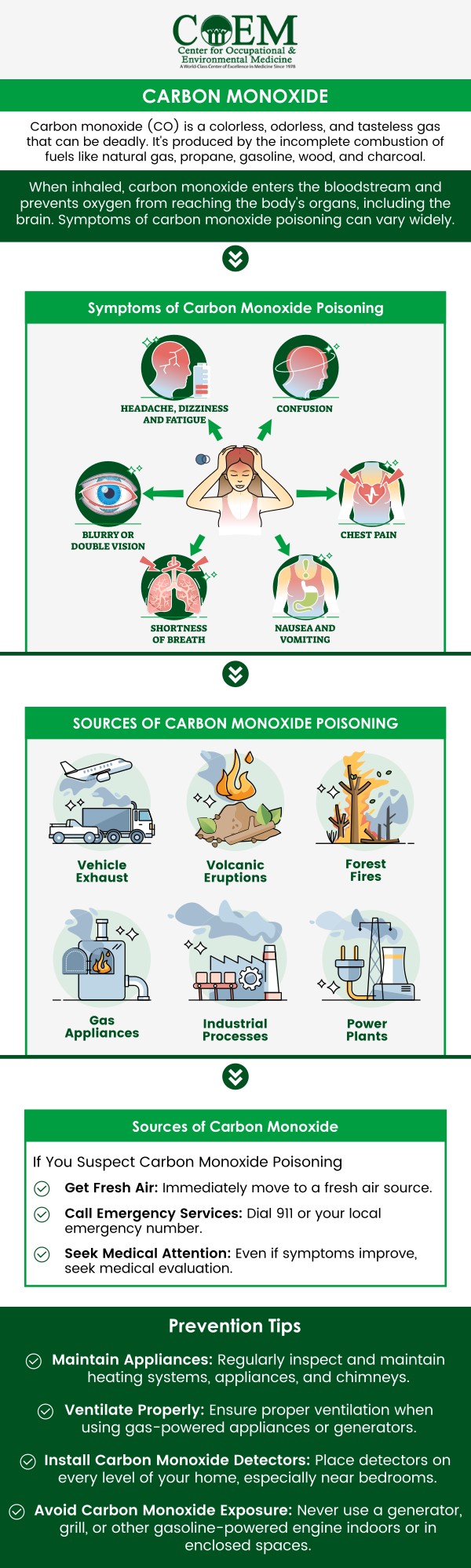
Table of Contents:
What are the symptoms of carbon monoxide poisoning?
How does carbon monoxide poisoning occur?
What long-term effects are associated with carbon monoxide poisoning?
What should I do if I am exposed to carbon monoxide?
How Dr. William J. Weirs, M.D., Can Help You Respond to Carbon Monoxide Exposure Safely
Anyone with acute exposure should immediately go to an ER for ABG (arterial blood gas) testing with a carboxyhemoglobin level. This has to be drawn by a respiratory therapist and processed immediately by a lab that can process an arterial blood gas. The current standard of care for acute CO poisoning is hyperbaric oxygen. The residual effects of CO poisoning are permanent and cannot be treated according to conventional medicine. However, there is research that specific supplementation may possibly help with recovery.
Carbon monoxide poisoning occurs when inhaled carbon monoxide enters the bloodstream and binds to hemoglobin, limiting the blood’s ability to deliver oxygen to organs. Because the gas is colorless, odorless, and tasteless, exposure may be difficult to detect. Early symptoms frequently resemble common illnesses and may include headache, dizziness, fatigue, nausea, and a sense of mental fog. Symptoms can intensify and involve multiple organ systems. Confusion, blurred vision, chest discomfort, shortness of breath, and vomiting may occur. Some individuals experience coordination difficulty, unusual drowsiness, or changes in behavior. In more severe cases, loss of consciousness or cardiac instability can occur as oxygen deprivation affects the brain and heart.
The nervous system is particularly vulnerable to oxygen deprivation. Persistent headache, memory lapses, slowed thinking, and mood changes may appear even after initial exposure has ended. Severity of presenting symptoms varies depending on concentration, duration of exposure, and underlying health status.
Specialists at The Center for Occupational and Environmental Medicine (COEM) assess symptom patterns in detail when carbon monoxide exposure is suspected. Because early warning signs overlap with many other conditions, careful clinical evaluation and appropriate testing are used to clarify whether carbon monoxide is contributing to the presentation.
Carbon monoxide poisoning occurs when fuels such as natural gas, propane, gasoline, wood, or charcoal burn incompletely, producing carbon monoxide gas as a byproduct. Enclosed or poorly ventilated spaces allow the gas to accumulate to dangerous levels. Common sources include vehicle exhaust, malfunctioning furnaces, gas appliances, portable generators, fireplaces, and industrial equipment. Environmental events such as forest fires and certain industrial processes can also contribute to elevated exposure. When inhaled, carbon monoxide enters the lungs and passes into the bloodstream, where it frequently attaches to hemoglobin. This binding reduces oxygen transport capacity and interferes with the release of oxygen to tissues. Organs with high oxygen demand, including the brain and heart, are affected quickly. Even moderate levels can impair cellular respiration and energy production.
Exposure may occur gradually in residential settings where a heating system leaks gas over time, or acutely in situations involving enclosed vehicle exhaust. Individuals may remain unaware until symptoms develop. Multiple people in the same environment experiencing similar symptoms can serve as an important indicator of environmental exposure. At COEM, evaluation of carbon monoxide exposure includes detailed environmental history and review of potential sources. Understanding where and how exposure occurred guides both immediate management and prevention of recurrence. Identifying the source remains a key step in protecting ongoing health.
Long term effects of carbon monoxide poisoning can involve persistent neurological, cognitive, and physical symptoms. Some individuals report ongoing memory difficulty, reduced concentration, slowed processing speed, and balance disturbances after initial recovery. These effects reflect prior oxygen deprivation within brain tissue and may become apparent days or weeks after the exposure event. Mood and behavioral changes may also present. Anxiety, irritability, depressive symptoms, and sleep disturbances sometimes occur. Cardiovascular strain during exposure can contribute to longer-term heart-related concerns, particularly in individuals with preexisting conditions. The degree of long term impact depends on exposure severity, duration, and the timeliness of treatment.
Physical symptoms such as fatigue, exercise intolerance, and headaches may persist during recovery. While many individuals recover fully with appropriate care, others require ongoing evaluation to monitor neurological and cardiovascular function. Early intervention supports better long-term outcomes.
The specialists at COEM provide a comprehensive follow-up assessment for individuals who have experienced carbon monoxide exposure. Detailed neurological evaluation and appropriate testing help determine whether residual effects remain. Structured monitoring supports recovery and addresses complications before they progress.
If carbon monoxide exposure is suspected, the immediate priority is removal from the source of exposure and access to fresh air. Relocating to an outdoor environment with adequate ventilation reduces ongoing inhalation. Emergency services should be contacted promptly so that medical evaluation can occur without delay.
Medical assessment often includes measurement of carboxyhemoglobin levels and evaluation of oxygen saturation. Administration of high-concentration oxygen through a mask may be initiated to accelerate the displacement of carbon monoxide from the bloodstream. Oxygen therapy helps restore normal oxygen delivery to tissues and reduces the duration of hypoxia. Even when symptoms appear mild or improve after fresh air exposure, medical evaluation remains advisable. Delayed neurological effects can develop after apparent stabilization. Early documentation and treatment reduce the risk of long-term complications.
Following emergency management, further evaluation may be appropriate to assess organ function and cognitive status. Specialists at COEM provide a detailed assessment to ensure that exposure has been fully addressed and that recovery is progressing appropriately.
Dr. William J. Weirs, who is board-certified in emergency medicine, has extensive experience in exposure management as well as environmental health assessment. His background supports prompt recognition of carbon monoxide-related illness and coordination of appropriate diagnostic evaluation. Independent medical examinations and detailed exposure reviews contribute to accurate documentation and treatment planning.
At COEM, patients receive comprehensive diagnostic services designed to identify both immediate and longer-term effects of carbon monoxide exposure. Care may include oxygen therapy coordination, neurological monitoring, metabolic support, and follow-up evaluation. Patients travel nationally and internationally for access to this level of specialized assessment.
Carbon monoxide treatment is available at The Center for Occupational and Environmental Medicine (COEM). For more information, contact us today or schedule an appointment online. We are conveniently located at 7510 North Forest Drive North Charleston, SC 29420. We serve patients from Charleston SC, Mount Pleasant SC, Summerville SC, North Charleston SC, Goose Creek SC, Ladson SC, Hanahan SC, James Island SC, John’s Island SC, Daniel Island SC, West Ashley SC, Moncks Corner SC, Sullivans Island SC, Folly Beach SC, Isle of Palms SC and all of South Carolina, Nationally, and Internationally. Patients routinely fly into Charleston to be evaluated by COEM and to enjoy this beautiful city, which is a Condé Nast and Travel and Leisure Top Domestic and International Tourist Destination.
Anyone with acute exposure should immediately go to an ER for ABG (arterial blood gas) testing with a carboxyhemoglobin level. This has to be drawn by a respiratory therapist and processed immediately by a lab that can process an arterial blood gas. The current standard of care for acute CO poisoning is hyperbaric oxygen. The residual effects of CO poisoning are permanent and cannot be treated according to conventional medicine. However, there is research that specific supplementation may possibly help with recovery.

Check Out Our 5 Star Reviews


Additional Services You May Like
- Functional Medicine
- Allergy and Autoimmunity
- Asthma and COPD
- Autoimmune Diseases
- Allergy and Immunology
- Anti Aging Medicine
- Autism and Children
- ADHD
- Bacterial Infections
- Chemical Toxicity
- Candida Fungal Problems
- Cancer Treatment
- Chronic Illness
- Chronic Inflammatory Response Syndrome (CIRS)
- Chronic Fatigue
- Cardiovascular Disease
- Carbon Monoxide Poisoning
- Chelation Therapy
- Depression
- Environmental Medicine
- Ear Ringing and Dizziness
- Fatigue Treatment
- Fertility and Preconception Care
- Gut Health
- GI 360 Test
- Heavy Metal Toxicity
- Hormonal Imbalances
- Headaches and Migraines
- Hormone Balancing (Men & Women)
- Hepatitis
- Integrative Medicine
- Independent Medical Evaluations
- Influenza
- Lab Testing
- Mold Toxicity
- Malnutrition
- Neurodegenerative Disease
- Natural Hormone Balancing For Women
- Preservative-Free IV Therapy
- Stomach Acid Imbalance
- Smoking Cessation Program
- Skin Therapy (Anti-Aging)
- Swine Flu
- Thyroid
- Mold Toxicity
- Vitamin D
- Weight Loss Program
- Women’s Breast Health Formula
Additional Services You May Like
- Functional Medicine
- Allergy and Autoimmunity
- Asthma and COPD
- Autoimmune Diseases
- Allergy and Immunology
- Anti Aging Medicine
- Autism and Children
- ADHD
- Bacterial Infections
- Chemical Toxicity
- Candida Fungal Problems
- Cancer Treatment
- Chronic Illness
- Chronic Fatigue
- Cardiovascular Disease
- Chronic Inflammatory Response Syndrome (CIRS)
- Carbon Monoxide Poisoning
- Chelation Therapy
- Depression
- Environmental Medicine
- Ear Ringing and Dizziness
- Fatigue Treatment
- Fertility and Preconception Care
- Gut Health
- GI 360 Test
- Heavy Metal Toxicity
- Hormonal Imbalances
- Headaches and Migraines
- Hormone Balancing (Men & Women)
- Hepatitis
- Integrative Medicine
- Independent Medical Evaluations
- Influenza
- Lab Testing
- Mold Toxicity
- Malnutrition
- Neurodegenerative Disease
- Natural Hormone Balancing For Women
- Preservative-Free IV Therapy
- Stomach Acid Imbalance
- Smoking Cessation Program
- Skin Therapy (Anti-Aging)
- Swine Flu
- Thyroid
- Mold Toxicity
- Vitamin D
- Weight Loss Program
- Women’s Breast Health Formula



 VIP Referral
 Send Text
 How May I Help You?