


Alpha-Lipoic Acid for Fatty Liver Disease: Benefits & Treatment Support
Fatty liver disease and metabolic dysfunction represent two sides of the same physiological crisis, driven by chronic oxidative stress and mitochondrial fatigue. Alpha-Lipoic Acid (ALA) stands out as a unique, dual-soluble antioxidant capable of penetrating cellular barriers to restore depleted glutathione levels and improve peripheral insulin sensitivity. When delivered via targeted intravenous protocols, ALA provides the biological potency needed to bypass digestive barriers and curb liver fat accumulation. At The Center for Occupational and Environmental Medicine (COEM), these evidence-based therapies are tailored to promote hepatic recovery, optimize glycemic control, and protect long-term metabolic health. For more information, contact us today or schedule an appointment online. We are conveniently located at 7510 North Forest Drive North Charleston, SC 29420. Patients routinely fly in to be evaluated by COEM, as we serve patients nationally and internationally. Find out if you have been exposed, extensive lab testing is available.

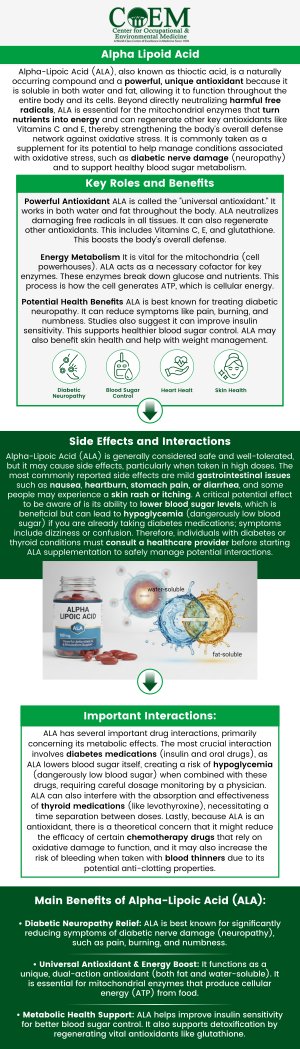
Table of Contents:
What is Alpha-Lipoic Acid (ALA), and how does it support liver recovery?
How does ALA lower liver fat and support blood sugar control?
What does the clinical research say?
How does ALA reduce hepatic inflammation and oxidative stress?
What makes IV Alpha-Lipoic Acid different from oral supplementation?
Which clinical health concerns benefit most from IV ALA protocols?
Alpha-Lipoic Acid (ALA) is a vital antioxidant and coenzyme that has been used for decades in clinical settings to aid in cellular detoxification, manage metabolic liver stress, and support patients navigating both acute and chronic hepatic challenges. Because liver metabolism and glycemic regulation are fundamentally linked, Intravenous (IV) ALA therapy serves as a core component of integrative protocols addressing fatty liver disease, insulin resistance, and related metabolic complications.
At The Center for Occupational and Environmental Medicine (COEM), our medical team utilizes targeted, clinical-grade IV ALA protocols to deliver the high biological concentrations necessary to counter oxidative stress, improve insulin sensitivity, and actively support cellular recovery.
Fatty liver disease rarely occurs in isolation—it is commonly driven by systemic metabolic stress, impaired glucose handling, and chronic mitochondrial strain. Alpha-Lipoic Acid is a naturally occurring organosulfur compound essential for aerobic metabolism and mitochondrial energy production.
Unlike conventional antioxidants that operate strictly in either water or lipid environments, ALA is uniquely both fat- and water-soluble. This dual solubility allows it to penetrate cell membranes easily, accessing deep mitochondrial structures where free radicals are generated. Within hepatic tissue, ALA acts as a vital cofactor for multienzyme complexes, supports intracellular redox cycling, and restores depleted stores of endogenous glutathione—the liver’s primary protective compound helping to preserve tissue integrity and calm chronic inflammatory signaling.
Excess fat accumulation in the liver (hepatic steatosis) is primarily driven by systemic insulin resistance and disrupted lipid metabolism. When peripheral tissues become resistant to insulin, circulating glucose and free fatty acids flood hepatic tissues, where they are converted into triglycerides:
• GLUT4 Translocation & Glycemic Control: ALA enhances cellular insulin sensitivity by promoting the translocation of glucose transporter 4 (GLUT4) to cell membranes. This enables skeletal muscle and peripheral tissues to take up blood glucose efficiently, directly stabilizing blood sugar levels and reducing the burden of excess glucose redirected to the liver.
• AMPK Activation: ALA stimulates adenosine monophosphate-activated protein kinase (AMPK), a metabolic master regulator. AMPK activation drives mitochondrial beta-oxidation (fat breakdown) while downregulating the enzymes responsible for de novo lipogenesis (new fat creation), curbing ongoing triglyceride deposition in hepatic cells.
The strongest clinical evidence for intravenous ALA centers on its profound effects on glucose-mediated microvascular and neurological damage, particularly diabetic peripheral neuropathy. Chronic poor glycemic control generates substantial reactive oxygen species (ROS), leading to microvascular endoneurial ischemia and nerve injury.
Key clinical findings regarding IV ALA include:
• The ALADIN Study: In the landmark Alpha-Lipoic Acid in Diabetic Neuropathy (ALADIN) randomized trial, 328 adults with diabetic peripheral neuropathy received IV ALA (100 mg, 600 mg, or 1200 mg) or a placebo daily for 3 weeks. Among protocol completers, neuropathy impairment and symptom scores fell 63.5% in the 600-mg arm compared to 38.4% in the placebo group, with adverse event rates comparable to control (18.2% vs. 20.7%).
• Meta-Analysis Confirmation: A larger meta-analysis across four randomized clinical trials (n=1,258) established that 52.7% of patients receiving 600 mg/day of IV ALA were categorized as symptom responders after 3 weeks, compared to 36.9% receiving placebo.
• Clinical Nuance & Scope: Research clearly shows these short-term benefits reflect symptomatic relief of acute burning, pain, numbness, and paresthesias by reducing microvascular oxidative stress and enhancing cellular redox balance—rather than representing generalized detoxification or permanent structural nerve regeneration.
• Supportive Oncology: Exploratory research has evaluated ALA for symptom mitigation in chemotherapy-induced peripheral neuropathy (CIPN); however, direct cancer outcome benefits remain unproven and require further clinical study.
As the body’s chief metabolic processing center, the liver produces high levels of reactive oxygen species (ROS) when handling chronic nutrient overloads. In steatohepatitis, excessive oxidative stress breaks down cellular membranes, upregulates transcription factors like NF-κB, and triggers inflammatory cytokines that drive progressive fibrosis and scarring.
ALA acts as a direct scavenger of free radicals while recycling other crucial endogenous antioxidants, including vitamins C and E, coenzyme Q10, and glutathione. By re-establishing intracellular glutathione pools, ALA downregulates downstream fibrotic pathways and calms the persistent inflammatory microenvironment that drives hepatic tissue deterioration.
While oral ALA supplements play a supportive role in daily wellness maintenance, their clinical impact on severe metabolic or hepatic stress is constrained by low oral bioavailability, rapid hepatic first-pass metabolism, and gastrointestinal limits.
Intravenous administration bypasses the digestive tract entirely, delivering 100% bioavailable, high-potency ALA directly into systemic circulation. This allows peak plasma concentrations to reach therapeutic thresholds that oral administration cannot replicate, providing the immediate cellular saturation needed to target stubborn insulin resistance, acute neurovascular symptoms, and deep hepatic tissue inflammation.
High-dose IV ALA is integrated into structured care plans for patients presenting with interrelated metabolic, hepatic, and microvascular conditions:
• Metabolic Dysfunction-Associated Steatotic Liver Disease (MASLD / NAFLD) and Steatohepatitis (MASH / NASH).
• Type 2 diabetes, metabolic syndrome, and marked insulin resistance.
• Short-term symptomatic relief of diabetic peripheral neuropathy (relieving burning, tingling, pain, and numbness).
• Chronic toxic or environmental liver stress requiring advanced antioxidant and glutathione support.
Treatment Timelines and Clinical Monitoring
Reversing metabolic liver stress and stabilizing blood sugar involves personalized care trajectories. Treatment schedules depend on the chronicity of the condition, glycemic control markers, and underlying liver histology:
• Individualized Frequency: Protocols commonly start with an intensive induction phase (several infusions over 2 to 4 weeks, matching clinical trial cadences) followed by tailored maintenance schedules as markers improve.
• Objective Tracking: Comprehensive progress is tracked through objective lab panels, including fasting blood glucose, HbA1c, fasting insulin, comprehensive lipid panels, and liver transaminases (ALT, AST, GGT).
• Patient Safety and Formulations at COEM
At COEM, all treatments are administered in a fully supervised clinical setting adhering to stringent medical standards:
• Clean Formulations: We utilize high-grade, preservative-free IV ALA formulations to avoid unnecessary chemical additives that would place additional metabolic strain on an already overburdened liver.
• Careful Infusion Protocols: Infusions are administered slowly by Registered Nurses (RNs) under physician oversight. Standard dosages start at measured levels (100–300 mg) and adjust to therapeutic doses (typically 600 mg up to 1,200 mg) based on patient tolerance, glycemic status, and clinical indication.
• Blood Glucose Safeguards: Because IV ALA actively improves insulin sensitivity and cellular glucose uptake, patient blood glucose levels are monitored closely during infusion to prevent hypoglycemia, particularly in patients concurrently taking glucose-lowering medications.
Personalized Metabolic & Liver Support at COEM
Under the medical leadership of Board-Certified Dr. William J. Weirs, MD, F.A.A.E.M., COEM delivers personalized care tailored to the complex interplay of metabolic health, environmental exposures, and hepatic function. Every protocol begins with a root-cause evaluation to uncover the underlying biological and dietary drivers of metabolic strain.
Our integrated approach unites advanced IV Alpha-Lipoic Acid therapy with evidence-based metabolic management to lower hepatic fat deposition, enhance insulin sensitivity, and protect long-term tissue function.
To learn more or schedule an appointment:
Address: 7510 North Forest Drive North Charleston, SC 29420
Service Areas: Serving patients across Charleston, Mount Pleasant, Summerville, North Charleston, Goose Creek, Ladson, Hanahan, James Island, Johns Island, Daniel Island, West Ashley, Moncks Corner, Sullivans Island, Folly Beach, Isle of Palms, statewide across South Carolina, nationally, and internationally.

Check Out Our 5 Star Reviews


Additional Services You May Like
- Functional Medicine
- Allergy and Autoimmunity
- Asthma and COPD
- Autoimmune Diseases
- Allergy and Immunology
- Anti Aging Medicine
- Autism and Children
- ADHD
- Bacterial Infections
- Chemical Toxicity
- Candida Fungal Problems
- Cancer Treatment
- Chronic Illness
- Chronic Inflammatory Response Syndrome (CIRS)
- Chronic Fatigue
- Cardiovascular Disease
- Carbon Monoxide Poisoning
- Chelation Therapy
- Depression
- Environmental Medicine
- Ear Ringing and Dizziness
- Fatigue Treatment
- Fertility and Preconception Care
- Gut Health
- GI 360 Test
- Heavy Metal Toxicity
- Hormonal Imbalances
- Headaches and Migraines
- Hormone Balancing (Men & Women)
- Hepatitis
- Integrative Medicine
- Independent Medical Evaluations
- Influenza
- Lab Testing
- Mold Toxicity
- Malnutrition
- Neurodegenerative Disease
- Natural Hormone Balancing For Women
- Preservative-Free IV Therapy
- Stomach Acid Imbalance
- Smoking Cessation Program
- Skin Therapy (Anti-Aging)
- Swine Flu
- Thyroid
- Mold Toxicity
- Vitamin D
- Weight Loss Program
- Women’s Breast Health Formula
Additional Services You May Like
- Functional Medicine
- Allergy and Autoimmunity
- Asthma and COPD
- Autoimmune Diseases
- Allergy and Immunology
- Anti Aging Medicine
- Autism and Children
- ADHD
- Bacterial Infections
- Chemical Toxicity
- Candida Fungal Problems
- Cancer Treatment
- Chronic Illness
- Chronic Fatigue
- Cardiovascular Disease
- Chronic Inflammatory Response Syndrome (CIRS)
- Carbon Monoxide Poisoning
- Chelation Therapy
- Depression
- Environmental Medicine
- Ear Ringing and Dizziness
- Fatigue Treatment
- Fertility and Preconception Care
- Gut Health
- GI 360 Test
- Heavy Metal Toxicity
- Hormonal Imbalances
- Headaches and Migraines
- Hormone Balancing (Men & Women)
- Hepatitis
- Integrative Medicine
- Independent Medical Evaluations
- Influenza
- Lab Testing
- Mold Toxicity
- Malnutrition
- Neurodegenerative Disease
- Natural Hormone Balancing For Women
- Preservative-Free IV Therapy
- Stomach Acid Imbalance
- Smoking Cessation Program
- Skin Therapy (Anti-Aging)
- Swine Flu
- Thyroid
- Mold Toxicity
- Vitamin D
- Weight Loss Program
- Women’s Breast Health Formula



 VIP Referral
 Send Text
 How May I Help You?