


What Causes Brain Fog?
Brain fog can make it difficult to focus, remember details, and think clearly throughout the day. It may be linked to inflammation, gut health issues, food sensitivities, toxins, hormone imbalance, or poor sleep. At COEM, our team uses a root-cause approach to help identify hidden factors that may be affecting mental clarity and energy while supporting clearer thinking, better focus, and long-term wellness. For more information, contact us or book an appointment online. We are conveniently located at 7510 North Forest Drive North Charleston, SC 29420. Patients routinely fly in to be evaluated by COEM, as we serve patients internationally. Find out if you have been exposed, extensive lab testing is available.
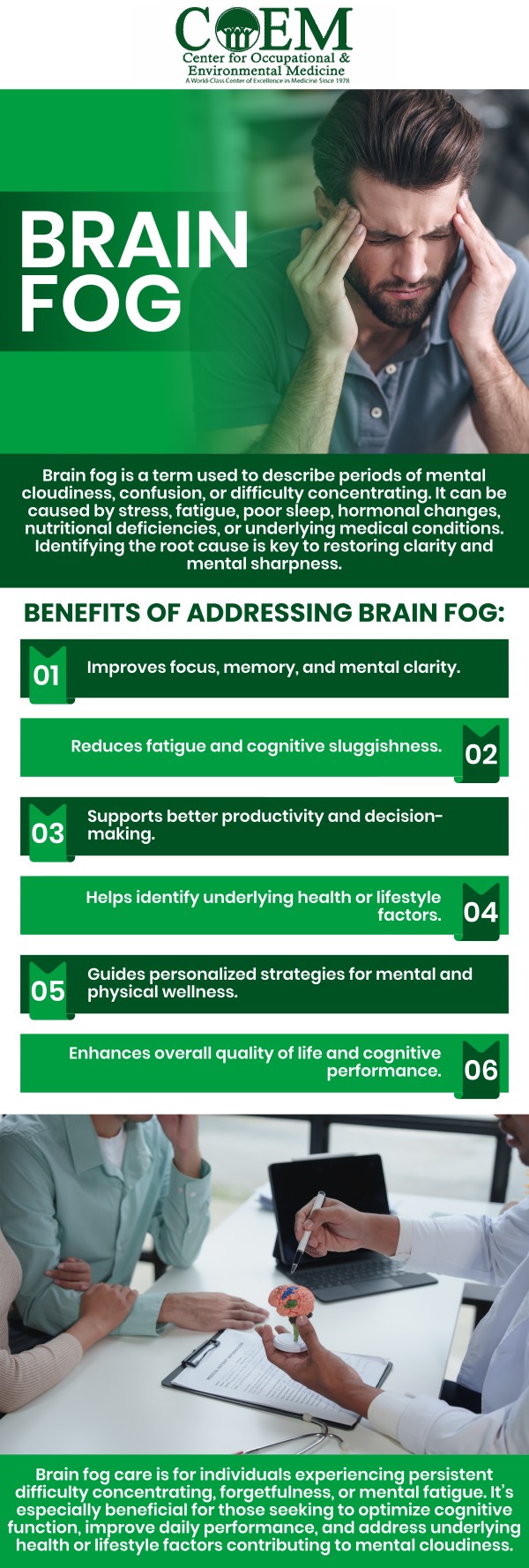
Table of Contents:
What exactly is brain fog, and is it a symptom of a larger health issue?
Why can’t I focus or remember simple things even after a full night’s sleep?
How do gut health, inflammation, and food sensitivities cause mental fatigue?
What tests do functional medicine doctors use to find the root cause of brain fog?
Root-Cause Brain Fog Evaluation in Charleston, SC with Dr. William J. Weirs and Our Team at COEM
Brain fog is not a formal diagnosis, but it is a common way people describe changes in mental clarity, focus, memory, and thinking speed. Someone with brain fog may feel forgetful, mentally slow, easily distracted, or unable to process information as clearly as usual. It may show up as trouble finding words, losing focus during conversations, rereading the same information, or feeling mentally exhausted after simple tasks. While occasional brain fog can happen from poor sleep, stress, dehydration, or overwork, ongoing brain fog may be a sign that the body is under deeper stress.
Persistent brain fog may be connected to issues such as chronic inflammation, thyroid imbalance, hormone changes, nutrient deficiencies, poor gut health, food sensitivities, blood sugar instability, mold exposure, environmental toxins, or immune system dysfunction. Because the brain depends on healthy circulation, balanced hormones, stable nutrients, and proper immune regulation, disruptions in other systems can affect cognitive function. A root-cause approach looks beyond the symptom itself and asks why the brain is not receiving the support it needs. Identifying underlying triggers can help create a more targeted plan to improve energy, clarity, memory, and overall mental performance.
Getting a full night’s sleep does not always mean the body or brain has fully recovered. Sleep quality can be affected by stress hormones, blood sugar changes, inflammation, sleep apnea, pain, digestive issues, or nervous system dysregulation. A person may sleep for seven or eight hours but still wake up feeling tired, foggy, and mentally unrefreshed. When the brain does not move through deep, restorative sleep stages properly, focus, memory, mood, and reaction time can all be affected the next day.
Difficulty focusing or remembering simple things may also be related to nutrient deficiencies, thyroid dysfunction, hormone imbalance, chronic infections, gut problems, food reactions, toxic exposures, or ongoing inflammation. The brain requires steady oxygen, glucose, amino acids, healthy fats, vitamins, minerals, and balanced neurotransmitter activity to function well. When any of these are disrupted, mental performance may decline even when sleep appears adequate. A deeper evaluation may help identify whether the issue is coming from poor sleep quality, metabolic imbalance, immune activation, digestive dysfunction, or environmental burden. Instead of treating brain fog as a standalone problem, functional medicine looks at the body as an interconnected system to understand why focus and memory are being affected.
Gut health can strongly influence brain function because the digestive system helps regulate nutrient absorption, immune activity, inflammation, and neurotransmitter production. When the gut lining, microbiome, or digestion is disrupted, the body may have a harder time absorbing key nutrients needed for energy and brain performance. Imbalances such as gut dysbiosis, yeast overgrowth, poor digestion, or intestinal inflammation may contribute to fatigue, bloating, mood changes, headaches, and brain fog. This gut-brain connection helps explain why digestive issues and mental fatigue often appear together.
Food sensitivities may also contribute to mental fatigue when certain foods trigger immune or inflammatory responses. Unlike classic food allergies, sensitivities may cause delayed symptoms that are harder to connect to a specific meal. These reactions can place stress on the immune system and may contribute to inflammation, poor concentration, low energy, headaches, joint discomfort, or mood changes. Chronic inflammation can affect the brain by interfering with cellular energy production, blood flow, neurotransmitter balance, and nervous system communication. A functional approach may evaluate diet, gut health, microbiome balance, inflammatory markers, and food sensitivity patterns to better understand what is driving symptoms. Addressing digestive health and inflammatory triggers may help support clearer thinking, steadier energy, and improved overall wellness.
Functional medicine doctors may use a combination of detailed health history, symptom review, physical evaluation, and advanced lab testing to explore the root causes of brain fog. Testing may include thyroid panels, blood sugar and insulin markers, vitamin and mineral levels, hormone testing, inflammatory markers, immune markers, liver function, kidney function, and markers of anemia or infection. Because brain fog can come from many different systems, testing often looks beyond basic screening to identify patterns that may affect energy, cognition, and nervous system function.
Depending on symptoms and history, additional testing may evaluate gut health, stool markers, food sensitivities, mold or mycotoxin exposure, heavy metals, environmental toxins, mitochondrial function, adrenal stress, autoimmune activity, or chronic infections. These tests are not the same for every person because brain fog can have different causes in different patients. For one person, the main driver may be thyroid imbalance or low B12. For another, it may be gut inflammation, toxic mold exposure, blood sugar instability, or hormone changes. The goal of functional testing is to connect symptoms with measurable imbalances so care can be more personalized. Once the root causes are better understood, a plan may include nutrition changes, lifestyle support, targeted supplementation, detoxification support when appropriate, sleep optimization, and ongoing monitoring.
At the Center for Occupational and Environmental Medicine (COEM), Dr. William J. Weirs and our team provide root-cause brain fog evaluation in Charleston, SC for patients experiencing poor focus, memory issues, mental fatigue, and difficulty thinking clearly. Brain fog may be linked to thyroid imbalance, hormone changes, gut dysfunction, chronic inflammation, food sensitivities, nutrient deficiencies, poor sleep, stress, or environmental exposures such as toxic mold. Our team takes a functional medicine approach to better understand what may be affecting brain function and overall wellness.
Dr. William J. Weirs is a board-certified Emergency Medicine physician with extensive training in Functional Medicine. He is also a Fellow in Integrative Medicine and a Fellow in Environmental Medicine, bringing more than 23 years of overall medical experience and 14 years of holistic medicine experience to patient care. Through advanced testing and personalized evaluation, Dr. Weirs and our team help identify hidden imbalances that may contribute to brain fog and create targeted care plans to support clearer thinking, better energy, and long-term health. For more information, contact us or book an appointment online. We are conveniently located at 7510 North Forest Drive North Charleston, SC 29420. We serve patients from Charleston SC, Mount Pleasant SC, Summerville SC, North Charleston SC, Goose Creek SC, Ladson SC, Hanahan SC, James Island SC, John’s Island SC, Daniel Island SC, West Ashley SC, Moncks Corner SC, Sullivans Island SC, Folly Beach SC, Isle of Palms SC and all of South Carolina, Nationally, and Internationally. Patients routinely fly into Charleston to be evaluated by COEM and to enjoy this beautiful city, which is a Condé Nast and Travel and Leisure Top Domestic and International Tourist Destination.

Check Out Our 5 Star Reviews


Additional Services You May Like
- Functional Medicine
- Allergy and Autoimmunity
- Asthma and COPD
- Autoimmune Diseases
- Allergy and Immunology
- Anti Aging Medicine
- Autism and Children
- ADHD
- Bacterial Infections
- Chemical Toxicity
- Candida Fungal Problems
- Cancer Treatment
- Chronic Illness
- Chronic Inflammatory Response Syndrome (CIRS)
- Chronic Fatigue
- Cardiovascular Disease
- Carbon Monoxide Poisoning
- Chelation Therapy
- Depression
- Environmental Medicine
- Ear Ringing and Dizziness
- Fatigue Treatment
- Fertility and Preconception Care
- Gut Health
- GI 360 Test
- Heavy Metal Toxicity
- Hormonal Imbalances
- Headaches and Migraines
- Hormone Balancing (Men & Women)
- Hepatitis
- Integrative Medicine
- Independent Medical Evaluations
- Influenza
- Lab Testing
- Mold Toxicity
- Malnutrition
- Neurodegenerative Disease
- Natural Hormone Balancing For Women
- Preservative-Free IV Therapy
- Stomach Acid Imbalance
- Smoking Cessation Program
- Skin Therapy (Anti-Aging)
- Swine Flu
- Thyroid
- Mold Toxicity
- Vitamin D
- Weight Loss Program
- Women’s Breast Health Formula
Additional Services You May Like
- Functional Medicine
- Allergy and Autoimmunity
- Asthma and COPD
- Autoimmune Diseases
- Allergy and Immunology
- Anti Aging Medicine
- Autism and Children
- ADHD
- Bacterial Infections
- Chemical Toxicity
- Candida Fungal Problems
- Cancer Treatment
- Chronic Illness
- Chronic Fatigue
- Cardiovascular Disease
- Chronic Inflammatory Response Syndrome (CIRS)
- Carbon Monoxide Poisoning
- Chelation Therapy
- Depression
- Environmental Medicine
- Ear Ringing and Dizziness
- Fatigue Treatment
- Fertility and Preconception Care
- Gut Health
- GI 360 Test
- Heavy Metal Toxicity
- Hormonal Imbalances
- Headaches and Migraines
- Hormone Balancing (Men & Women)
- Hepatitis
- Integrative Medicine
- Independent Medical Evaluations
- Influenza
- Lab Testing
- Mold Toxicity
- Malnutrition
- Neurodegenerative Disease
- Natural Hormone Balancing For Women
- Preservative-Free IV Therapy
- Stomach Acid Imbalance
- Smoking Cessation Program
- Skin Therapy (Anti-Aging)
- Swine Flu
- Thyroid
- Mold Toxicity
- Vitamin D
- Weight Loss Program
- Women’s Breast Health Formula



 VIP Referral
 Send Text
 How May I Help You?