


Who Offers Esophagitis Treatment in Charleston, SC?
Esophagitis is a painful inflammation of the esophagus lining, often caused by acid reflux, infections, or allergic reactions such as Eosinophilic Esophagitis (EoE). If left untreated, it can lead to difficulty swallowing, chest pain, and potential scarring of the esophageal tissues, affecting daily nutrition and comfort. The Center for Occupational and Environmental Medicine (COEM), led by Board-certified Dr. William J. Weirs, MD, specializes in diagnosing the underlying causes of esophagitis and providing personalized treatment plans. For more information, contact us today or schedule an appointment online. We are conveniently located at 7510 North Forest Drive North Charleston, SC 29420.
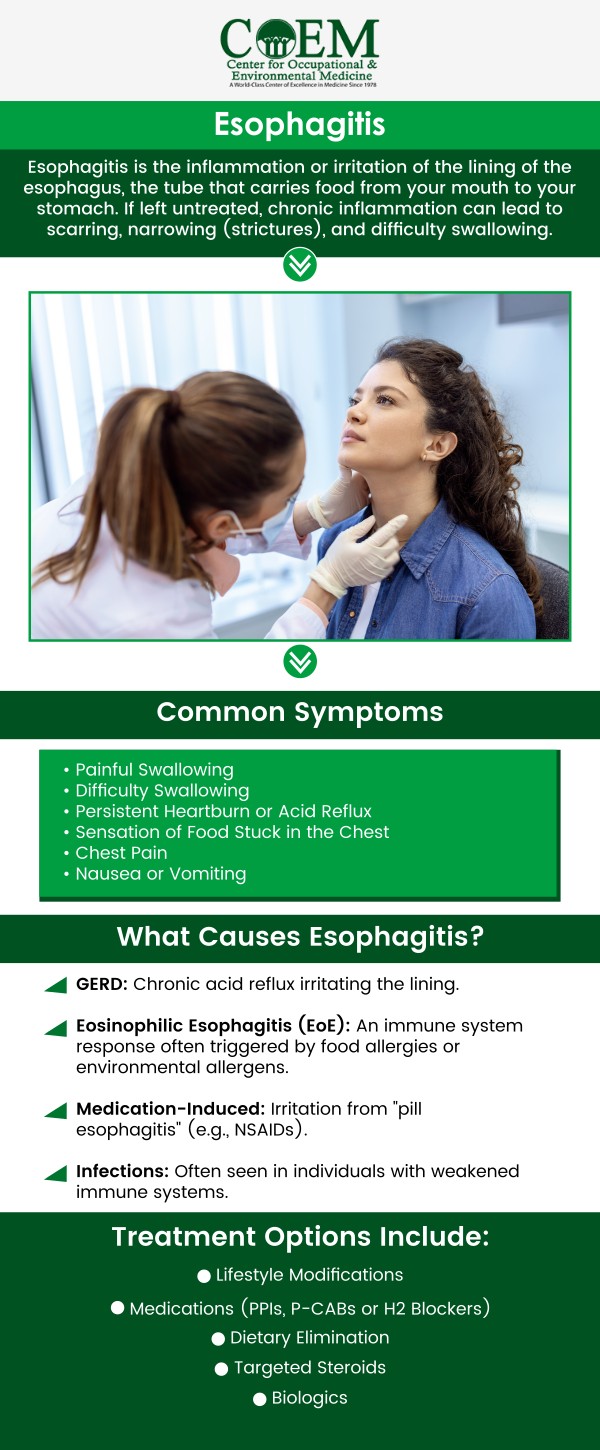
Table of Contents:
What are the symptoms of esophagitis?
What causes esophagitis?
How is eosinophilic esophagitis different from other types?
When should I see a doctor for esophagitis symptoms?
Esophagitis Treatment in Charleston, SC: Trusted Care from Dr. William J. Weirs, M.D.
Esophagitis is an inflammation of the esophageal lining. It can present alongside various symptoms, but often begins with discomfort during swallowing. Heartburn and acid reflux are also common, particularly when inflammation is associated with gastric acid exposure. As inflammation progresses, swallowing may become increasingly painful. Some individuals may find that solid foods feel difficult to pass. In more advanced cases, food impaction can occur, requiring medical intervention. Chronic irritation may also lead to persistent throat clearing, hoarseness, or cough. These symptoms can overlap with other gastrointestinal or respiratory conditions, which makes a professional assessment essential.
Eosinophilic involvement or chronic reflux may lead to subtle signs that develop gradually. A patient might adapt eating patterns by chewing excessively or avoiding certain textures without realizing that an underlying inflammatory process is present. Unintentional weight loss may occur when eating becomes uncomfortable. Nausea or regurgitation may also accompany ongoing irritation of the esophageal lining.
The specialists at The Center for Occupational and Environmental Medicine (COEM) evaluate swallowing difficulty, reflux patterns, and dietary triggers as part of a thorough assessment. Diagnostic approaches may include imaging such as a barium swallow study, endoscopic visualization, and biopsy when indicated. These diagnostic tests are not performed at our clinic; patients who require advanced imaging or procedural evaluation are referred to appropriate specialists who perform these services.
Esophagitis can develop from a variety of mechanisms. Reflux-related inflammation occurs when stomach acid repeatedly irritates the esophageal lining. Over time, persistent exposure can erode protective tissue and lead to pain, swelling, and difficulty swallowing. This form is often associated with gastroesophageal reflux patterns and may fluctuate with dietary habits and body positioning.
Certain drugs, including nonsteroidal anti-inflammatory medications, can irritate the esophagus if they remain in contact with the lining for extended periods. Taking medications without adequate water or lying down immediately afterward may increase the risk. Radiation therapy and certain medical procedures can also lead to localized inflammation.
Allergic and immune-mediated reactions may contribute as well. In eosinophilic esophagitis, immune cells infiltrate the esophageal tissue in response to food or environmental allergens. Infectious forms can occur in individuals with weakened immune systems, where viral or fungal organisms inflame the tissue. Chronic vomiting and repeated exposure to stomach contents may also injure the lining.
At COEM in North Charleston, South Carolina, dietary history, medication use, environmental exposures, and immune status are reviewed to guide custom treatment interventions.
Eosinophilic esophagitis is from reflux or medication-induced forms because it involves a specific immune response within the esophageal tissue. Eosinophils are a type of white blood cell often associated with allergic conditions, accumulate in the lining, and contribute to chronic inflammation. This is typically confirmed through biopsy obtained during endoscopy, where microscopic analysis reveals elevated eosinophil counts. Unlike reflux esophagitis, which is primarily driven by acid exposure, eosinophilic esophagitis often relates to food sensitivities or environmental allergens. Patients may present with difficulty swallowing, recurrent food impactions, or a long history of adapting eating habits. Children and adults may both be affected, though symptom presentation can vary by age. Structural changes such as narrowing or ring formation may develop over time if inflammation persists.
Management strategies and treatment options are guided by each condition’s nature and unique presentation. Acid suppression alone may not fully address immune-mediated inflammation. Dietary modification aimed at identifying and removing trigger foods may be recommended. In some cases, topical corticosteroid therapy is used to calm localized immune activity.
The specialists at COEM incorporate advanced diagnostic tools and dietary evaluation when eosinophilic esophagitis is suspected. Biopsy results, symptom patterns, and potential allergen exposure are interpreted together. This evaluation supports targeted therapy designed to reduce immune activation and restore esophageal integrity.
Medical evaluation becomes necessary when swallowing becomes painful, food feels stuck, or chest discomfort persists beyond occasional heartburn. Recurrent reflux that disrupts sleep or daily function warrants further assessment. Unexplained weight loss, vomiting, or evidence of gastrointestinal bleeding, such as dark stools require prompt attention. Persistent symptoms should not be ignored, particularly when they interfere with nutrition. Individuals who experience repeated food impaction or progressive difficulty swallowing should seek care without delay. These signs may indicate narrowing or structural changes within the esophagus. Early diagnosis allows for intervention before complications such as strictures develop. Timely evaluation also reduces the risk of prolonged inflammation.
Diagnostic methods may include barium imaging studies to visualize structural abnormalities and endoscopy to directly examine the esophageal lining. Biopsy provides histological detail that distinguishes between reflux, eosinophilic, infectious, or medication-related inflammation. Identifying the correct subtype guides effective treatment and reduces recurrence. Our clinic does not perform barium studies, endoscopy, or biopsy procedures; when these evaluations are needed, patients are referred to qualified specialists for further testing.
At COEM, evaluation is comprehensive and individualized. Specialists assess the presenting symptoms alongside dietary patterns, immune status, medication use, and environmental factors that may contribute to ongoing irritation. Early intervention supports faster recovery, and many otherwise healthy individuals improve within two to four weeks once the underlying cause is addressed appropriately.
Dr. William J. Weirs brings extensive clinical experience and is board-certified in emergency medicine. His background supports careful differentiation between gastrointestinal and cardiac causes of chest discomfort. At COEM in North Charleston, South Carolina, patients receive access to advanced diagnostic testing, including imaging studies, endoscopic referral coordination, and laboratory analysis when indicated. Dietary and lifestyle modifications are frequently incorporated into treatment plans to reduce inflammatory triggers and support tissue healing. Patients travel nationally and internationally for this level of comprehensive evaluation.
The Center for Occupational and Environmental Medicine (COEM) provides esophagitis treatment. For more information, contact us today or book an appointment online. We are conveniently located at 7510 North Forest Drive North Charleston, SC 29420. We serve patients from Charleston SC, Mount Pleasant SC, Summerville SC, North Charleston SC, Goose Creek SC, Ladson SC, Hanahan SC, James Island SC, John’s Island SC, Daniel Island SC, West Ashley SC, Moncks Corner SC, Sullivans Island SC, Folly Beach SC, Isle of Palms SC and all of South Carolina, Nationally, and Internationally. Patients routinely fly into Charleston to be evaluated by COEM and to enjoy this beautiful city, which is a Condé Nast and Travel and Leisure Top Domestic and International Tourist Destination. Find out if you have been exposed, extensive lab testing is available.

Check Out Our 5 Star Reviews


Additional Services You May Like
- Functional Medicine
- Allergy and Autoimmunity
- Asthma and COPD
- Autoimmune Diseases
- Allergy and Immunology
- Anti Aging Medicine
- Autism and Children
- ADHD
- Bacterial Infections
- Chemical Toxicity
- Candida Fungal Problems
- Cancer Treatment
- Chronic Illness
- Chronic Inflammatory Response Syndrome (CIRS)
- Chronic Fatigue
- Cardiovascular Disease
- Carbon Monoxide Poisoning
- Chelation Therapy
- Depression
- Environmental Medicine
- Ear Ringing and Dizziness
- Fatigue Treatment
- Fertility and Preconception Care
- Gut Health
- GI 360 Test
- Heavy Metal Toxicity
- Hormonal Imbalances
- Headaches and Migraines
- Hormone Balancing (Men & Women)
- Hepatitis
- Integrative Medicine
- Independent Medical Evaluations
- Influenza
- Lab Testing
- Mold Toxicity
- Malnutrition
- Neurodegenerative Disease
- Natural Hormone Balancing For Women
- Preservative-Free IV Therapy
- Stomach Acid Imbalance
- Smoking Cessation Program
- Skin Therapy (Anti-Aging)
- Swine Flu
- Thyroid
- Mold Toxicity
- Vitamin D
- Weight Loss Program
- Women’s Breast Health Formula
Additional Services You May Like
- Functional Medicine
- Allergy and Autoimmunity
- Asthma and COPD
- Autoimmune Diseases
- Allergy and Immunology
- Anti Aging Medicine
- Autism and Children
- ADHD
- Bacterial Infections
- Chemical Toxicity
- Candida Fungal Problems
- Cancer Treatment
- Chronic Illness
- Chronic Fatigue
- Cardiovascular Disease
- Chronic Inflammatory Response Syndrome (CIRS)
- Carbon Monoxide Poisoning
- Chelation Therapy
- Depression
- Environmental Medicine
- Ear Ringing and Dizziness
- Fatigue Treatment
- Fertility and Preconception Care
- Gut Health
- GI 360 Test
- Heavy Metal Toxicity
- Hormonal Imbalances
- Headaches and Migraines
- Hormone Balancing (Men & Women)
- Hepatitis
- Integrative Medicine
- Independent Medical Evaluations
- Influenza
- Lab Testing
- Mold Toxicity
- Malnutrition
- Neurodegenerative Disease
- Natural Hormone Balancing For Women
- Preservative-Free IV Therapy
- Stomach Acid Imbalance
- Smoking Cessation Program
- Skin Therapy (Anti-Aging)
- Swine Flu
- Thyroid
- Mold Toxicity
- Vitamin D
- Weight Loss Program
- Women’s Breast Health Formula



 VIP Referral
 Send Text
 How May I Help You?