


Restore More Youthful Testosterone
Restore more youthful testosterone levels with personalized functional medicine at The Center for Occupational and Environmental Medicine. Low testosterone can lead to fatigue, muscle loss, and decreased drive. Board-certified Dr. William J. Weirs offers targeted therapies to help you regain energy, strength, and vitality. Start your journey to renewed wellness today. For more information, contact us today or schedule an appointment online. We are conveniently located at 7510 North Forest Drive North Charleston, SC 29420. Patients routinely fly in to be evaluated by COEM, as we serve patients nationally and internationally. Find out if you have been exposed, extensive lab testing is available.
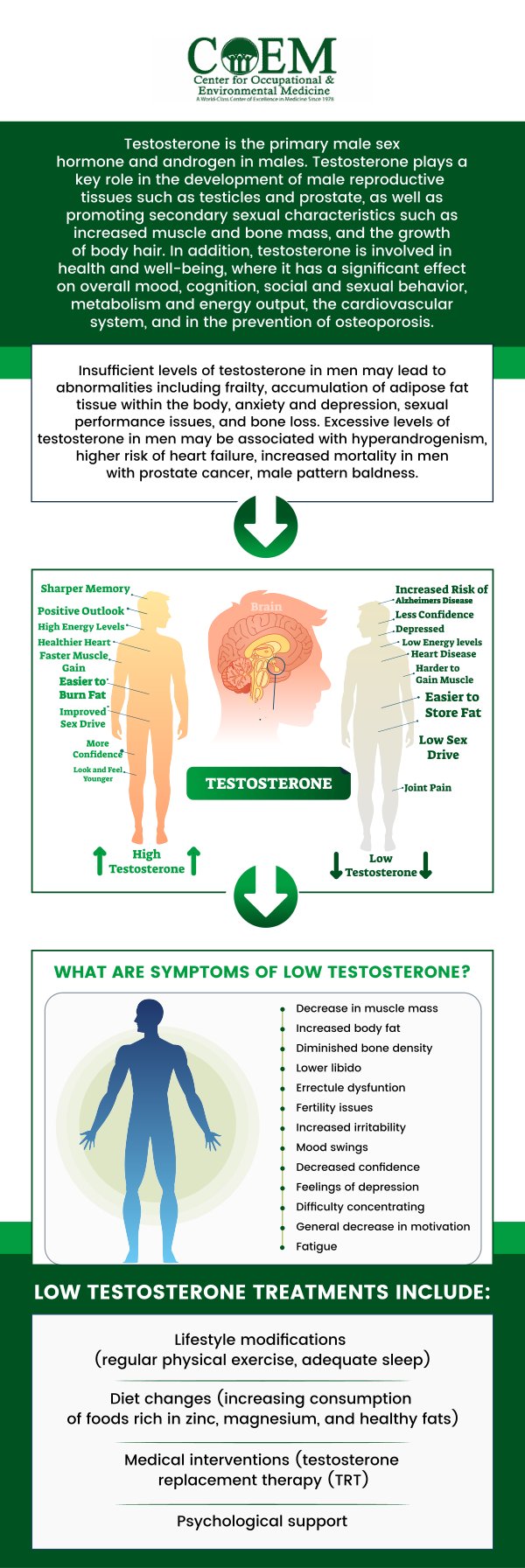
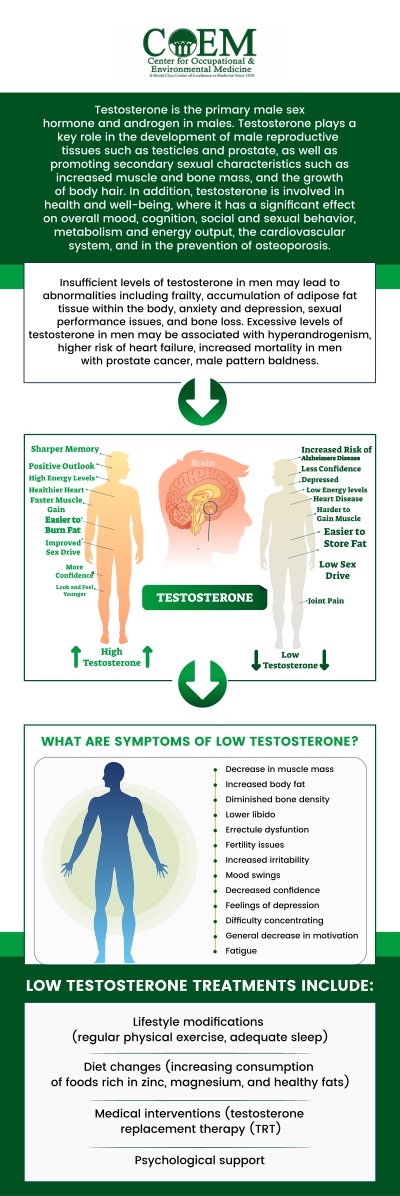
Table of Contents:
What are the common symptoms of low testosterone (Low-T)?
What causes low testosterone levels?
What does testosterone do in the body?
How is a testosterone imbalance diagnosed?
Restore Your Natural Testosterone Levels with Dr. William J. Weirs at COEM in Charleston
Low testosterone (Low-T) can have a big impact on both physical and mental health, as this hormone plays a role in many essential functions in the body. When testosterone levels drop, the changes may be gradual and affect things like your energy, metabolism, and overall sense of vitality. Many people first notice persistent fatigue that doesn’t seem to improve with normal rest. Along with this, changes in muscle strength and body composition can occur. Testosterone helps maintain lean muscle mass and influences how the body stores fat. When testosterone levels fall, it’s common to experience reduced muscle tone and gradual weight gain, especially around the midsection. Some people also report a decrease in physical endurance during exercise or slower recovery after physical activity.
In addition to physical symptoms, mood and cognitive changes are also common. You might feel mentally foggy, with difficulty focusing or concentrating, and your memory may not be as sharp as it used to be. Brain fog and trouble remembering things are often linked to Low-T. Emotional well-being can also be affected, with many experiencing irritability or feeling down more often than usual. This drop in testosterone can impact your overall outlook on life, making you feel less motivated or mentally fatigued. These mental symptoms often go hand in hand with the physical changes and can affect your overall quality of life.
Another significant area where Low-T shows up is in sexual function. Many people with Low-T experience a decreased sex drive and may notice erectile dysfunction becoming more common. If you find that you’re not interested in sex the way you once were, or you’re having trouble maintaining an erection, these could be signs of Low-T. Testosterone is crucial for sexual health, and without enough of it, these intimate experiences can become more difficult.
Specialists at The Center for Occupational and Environmental Medicine (COEM) assess all these symptoms carefully, helping you understand how hormone imbalances like Low-T might be affecting your life.
Testosterone levels can drop for many reasons, both biological and environmental. Aging is one of the main causes. As people get older, their hormone production naturally starts to change, and testosterone levels often decrease. But aging isn’t the only factor—hormonal balance is controlled by a complex network that includes the brain, pituitary gland, and reproductive organs. When this system becomes disrupted, testosterone production can slow down. Other factors like chronic stress and poor sleep also play a role. Stress can interfere with the signals that regulate testosterone, and poor sleep can disrupt the body’s natural hormone production. Since many of our hormones are regulated by circadian rhythms, a lack of consistent, restful sleep can lead to imbalances.
Metabolic health is another important factor in testosterone levels. Conditions like obesity, insulin resistance, and chronic inflammation can all interfere with the body’s ability to produce and maintain healthy testosterone levels. Nutritional deficiencies and exposure to certain environmental toxins can also contribute to hormonal disruptions.
At COEM, we consider all these factors during a comprehensive evaluation. Our approach blends traditional medicine with functional medicine to understand the root causes of hormonal imbalances and create personalized treatment plans.
Testosterone is a crucial hormone that affects several vital systems in the body. It helps build and maintain muscle mass, supports bone density, and plays a key role in regulating metabolism. These functions are important for maintaining strength, performance, and overall structural health, especially as you age. Testosterone also affects how your body uses energy and converts nutrients, which is why it’s closely tied to how efficiently your metabolism works.
Cognitive function is also influenced by testosterone. Low levels of this hormone can impact your mood, concentration, and mental clarity. This is why some people with Low-T experience symptoms like brain fog, lack of focus, and memory problems. Testosterone impacts brain chemistry, affecting your motivation and ability to stay sharp throughout the day.
At COEM, we examine how testosterone interacts with other hormones and lifestyle factors, and we work with you to address your symptoms through a personalized care approach.
Diagnosing Low-T begins with a comprehensive clinical evaluation. A doctor will usually start by discussing your symptoms, lifestyle, and medical history. They may then recommend blood tests to measure your hormone levels. These tests help determine whether your testosterone levels are outside the normal range.
While total testosterone levels are often tested, this doesn’t always provide the full picture. Testosterone exists in several forms in the bloodstream, including free testosterone and bound testosterone, so additional testing might be needed to get a more accurate assessment. A complete hormonal profile might also include tests for other hormones that impact testosterone production, like those related to the pituitary and metabolic function.
At COEM, we offer a functional medicine approach, which takes a deeper dive into your health. We use lab work and your health history to uncover underlying causes of hormonal imbalances and create a treatment plan tailored just for you.
With this thorough approach, we ensure that you’re not just treating symptoms, but addressing the root cause of your Low-T.
Hormonal balance plays a significant role in overall health, influencing energy levels, metabolism, muscle strength, and emotional well-being. When testosterone levels decline, individuals may begin to experience physical and cognitive changes that affect daily life. Addressing these changes begins with a thorough evaluation designed to understand how hormone regulation may be influencing the patient’s symptoms.
Physicians at COEM assess testosterone levels through comprehensive testing and clinical review. Laboratory analysis may examine total testosterone alongside additional hormone markers to provide a more detailed picture of endocrine function. This expanded view allows clinicians to identify patterns that might not appear through limited screening methods. Treatment options may vary depending on the patient’s health profile and laboratory findings. The medical team currently prescribes oral testosterone therapy in appropriate cases while continuing to evaluate additional treatment approaches.
Patients seeking hormone evaluation in North Charleston, SC, often consult with the physicians affiliated with COEM. Dr. William J. Weirs, M.D., F.A.A.E.M., is a board‑certified emergency medicine physician with extensive experience in functional, environmental, and integrative approaches to patient care. Dr. Weirs is also a Fellow in Integrative Medicine. He has practiced emergency medicine and now focuses on individualized wellness strategies that address underlying contributors to hormonal imbalance.
Testosterone treatment is available at The Center for Occupational and Environmental Medicine (COEM). For more information, contact us today or book an appointment online. We are conveniently located at 7510 North Forest Drive North Charleston, SC 29420. We serve patients from Charleston SC, Mount Pleasant SC, Summerville SC, North Charleston SC, Goose Creek SC, Ladson SC, Hanahan SC, James Island SC, John’s Island SC, Daniel Island SC, West Ashley SC, Moncks Corner SC, Sullivans Island SC, Folly Beach SC, Isle of Palms SC and all of South Carolina, Nationally, and Internationally. Patients routinely fly into Charleston to be evaluated by COEM and to enjoy this beautiful city, which is a Condé Nast and Travel and Leisure Top Domestic and International Tourist Destination.

Check Out Our 5 Star Reviews


Additional Services You May Like
- Functional Medicine
- Allergy and Autoimmunity
- Asthma and COPD
- Autoimmune Diseases
- Allergy and Immunology
- Anti Aging Medicine
- Autism and Children
- ADHD
- Bacterial Infections
- Chemical Toxicity
- Candida Fungal Problems
- Cancer Treatment
- Chronic Illness
- Chronic Inflammatory Response Syndrome (CIRS)
- Chronic Fatigue
- Cardiovascular Disease
- Carbon Monoxide Poisoning
- Chelation Therapy
- Depression
- Environmental Medicine
- Ear Ringing and Dizziness
- Fatigue Treatment
- Fertility and Preconception Care
- Gut Health
- GI 360 Test
- Heavy Metal Toxicity
- Hormonal Imbalances
- Headaches and Migraines
- Hormone Balancing (Men & Women)
- Hepatitis
- Integrative Medicine
- Independent Medical Evaluations
- Influenza
- Lab Testing
- Mold Toxicity
- Malnutrition
- Neurodegenerative Disease
- Natural Hormone Balancing For Women
- Preservative-Free IV Therapy
- Stomach Acid Imbalance
- Smoking Cessation Program
- Skin Therapy (Anti-Aging)
- Swine Flu
- Thyroid
- Mold Toxicity
- Vitamin D
- Weight Loss Program
- Women’s Breast Health Formula
Additional Services You May Like
- Functional Medicine
- Allergy and Autoimmunity
- Asthma and COPD
- Autoimmune Diseases
- Allergy and Immunology
- Anti Aging Medicine
- Autism and Children
- ADHD
- Bacterial Infections
- Chemical Toxicity
- Candida Fungal Problems
- Cancer Treatment
- Chronic Illness
- Chronic Fatigue
- Cardiovascular Disease
- Chronic Inflammatory Response Syndrome (CIRS)
- Carbon Monoxide Poisoning
- Chelation Therapy
- Depression
- Environmental Medicine
- Ear Ringing and Dizziness
- Fatigue Treatment
- Fertility and Preconception Care
- Gut Health
- GI 360 Test
- Heavy Metal Toxicity
- Hormonal Imbalances
- Headaches and Migraines
- Hormone Balancing (Men & Women)
- Hepatitis
- Integrative Medicine
- Independent Medical Evaluations
- Influenza
- Lab Testing
- Mold Toxicity
- Malnutrition
- Neurodegenerative Disease
- Natural Hormone Balancing For Women
- Preservative-Free IV Therapy
- Stomach Acid Imbalance
- Smoking Cessation Program
- Skin Therapy (Anti-Aging)
- Swine Flu
- Thyroid
- Mold Toxicity
- Vitamin D
- Weight Loss Program
- Women’s Breast Health Formula



 VIP Referral
 Send Text
 How May I Help You?