


What Is Mycotoxin Poisoning and How Can It Affect Your Health?
Mycotoxin poisoning occurs when toxic compounds produced by mold and fungi are inhaled, ingested, or absorbed into the body. These toxins can cause a wide range of symptoms, including fatigue, headaches, respiratory issues, and cognitive dysfunction. Long-term exposure can lead to chronic inflammation, immune system dysfunction, and damage to vital organs like the liver and lungs. At COEM, our team specializes in diagnosing and treating mycotoxin poisoning, offering personalized care to help restore health and prevent lasting complications. Early detection and treatment are essential to mitigate the harmful effects of mycotoxin exposure. For more information, contact us today or schedule an appointment online. We are conveniently located at 7510 North Forest Drive North Charleston, SC 29420. Patients routinely fly in to be evaluated by COEM, as we serve patients internationally. Find out if you have been exposed, extensive lab testing is available.
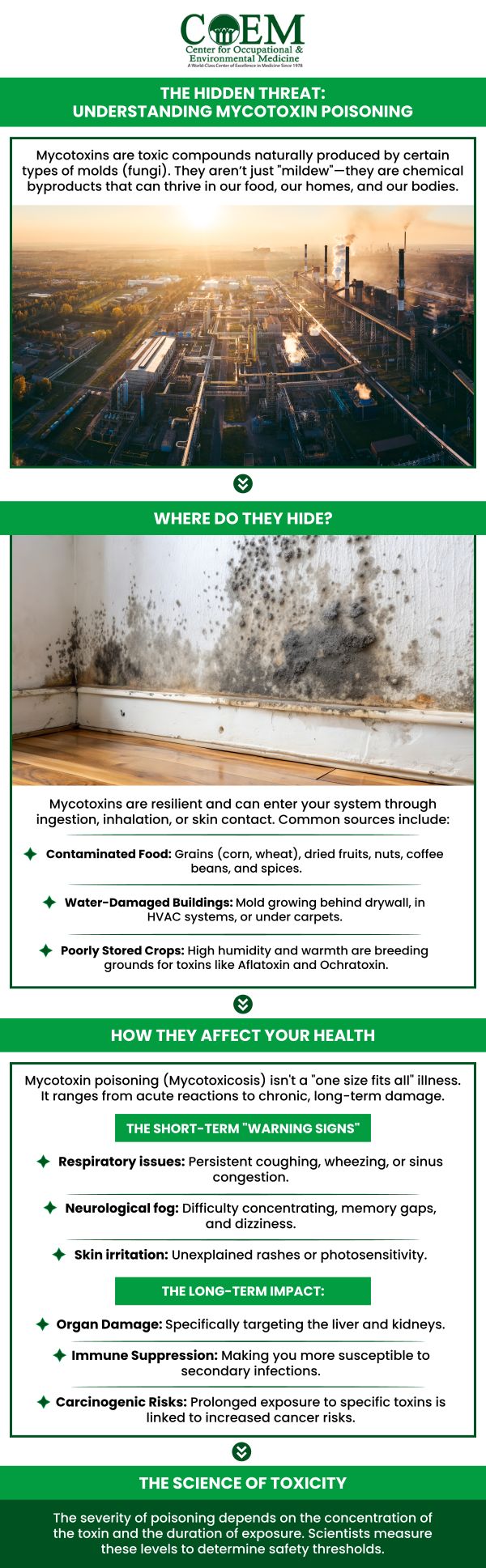
Table of Contents:
What is mycotoxin poisoning?
What symptoms are associated with mycotoxin poisoning?
How does mycotoxin poisoning affect the immune system?
Can mycotoxin poisoning lead to long‑term health problems?
How quickly do symptoms appear after exposure to mycotoxins?
Mycotoxin Poisoning: Detoxify and Heal with Dr. William J. Weirs at COEM in Charleston, SC
Mycotoxin poisoning, also known as mycotoxicosis, occurs when a person is exposed to toxic compounds produced by certain types of molds. These toxic substances, called mycotoxins, are released by mold species that thrive in damp, moisture-rich environments, such as homes with water damage. Mycotoxins can also contaminate food products like grains, nuts, and dried fruits. When inhaled, ingested, or absorbed through the skin, these toxins can enter the body and cause a variety of harmful health effects, ranging from acute symptoms to chronic conditions. The toxicity of mycotoxins varies depending on the specific mold species and the quantity of exposure, but they are often harmful even at low levels of contact.
The symptoms associated with mycotoxin exposure are diverse, affecting multiple body systems. The body’s response to mycotoxins often includes inflammation and immune system disruption. It’s important to note that mycotoxin poisoning is distinct from a typical allergic reaction to mold; it is caused by the direct effects of the toxins produced by the mold, rather than an immune response to the mold spores themselves. Chronic or long-term exposure to mycotoxins, especially in water-damaged buildings or poorly ventilated areas, can lead to persistent health issues and further complications if not addressed properly.
The symptoms of mycotoxin poisoning can vary greatly depending on the individual’s level of exposure and sensitivity to the toxins. Common symptoms include chronic fatigue, headaches, memory issues, difficulty concentrating (often referred to as “brain fog”), respiratory issues such as coughing and wheezing, and gastrointestinal problems like nausea, diarrhea, and stomach cramps. These symptoms often mimic those of other chronic conditions, which can make it challenging to diagnose mycotoxin poisoning without a thorough medical evaluation and environmental exposure history.
In more severe cases, mycotoxin exposure can cause systemic inflammation, immune system suppression, and damage to vital organs such as the liver, kidneys, and lungs. Long-term exposure, particularly in individuals with compromised immune systems, may result in more severe conditions, including autoimmune diseases, neurological disorders, and even an increased risk of cancer. Because of the wide range of symptoms and their similarity to other health conditions, it is essential to consider mycotoxins as a potential cause, particularly if there is a history of exposure to water-damaged buildings or moldy environments.
Mycotoxin poisoning can significantly impair the body’s immune system, leading to both acute and chronic health effects. These toxins directly affect immune cells by disrupting normal immune responses, reducing the body’s ability to fight infections and respond to inflammation. Specifically, mycotoxins can suppress the production of certain immune system molecules, such as cytokines, which are essential for immune regulation. This immune dysfunction makes it more difficult for the body to mount effective defenses against pathogens, increasing vulnerability to infections and other diseases.
Furthermore, mycotoxins can cause chronic inflammation, a hallmark of many autoimmune and inflammatory conditions. The immune system’s inability to properly regulate inflammation can lead to a state of continuous, low-grade inflammation in the body, which contributes to symptoms like joint pain, muscle aches, and fatigue. Over time, this prolonged inflammatory response can exacerbate existing health conditions, making it harder for the body to recover and maintain its natural defenses. As a result, individuals with mycotoxin exposure often experience a compromised immune system, which can complicate both diagnosis and treatment.
Yes, mycotoxin poisoning can lead to a wide range of long-term health problems. Chronic exposure to mycotoxins, especially in environments with persistent mold contamination, has been associated with lasting effects on the immune system, respiratory function, and neurological health. For example, long-term exposure to mycotoxins can lead to chronic inflammation in the lungs and other organs, which may contribute to conditions like asthma, chronic obstructive pulmonary disease (COPD), or other respiratory disorders. It may also exacerbate pre-existing conditions such as allergies or autoimmune diseases.
The neurological impact of chronic mycotoxin exposure can result in memory problems, difficulty concentrating, and other cognitive dysfunctions. Additionally, long-term exposure can disrupt the body’s ability to detoxify effectively, leading to ongoing fatigue, headaches, and other systemic symptoms. In severe cases, individuals may develop conditions such as fibromyalgia or chronic fatigue syndrome, where the body’s inflammatory response becomes overwhelming, and symptoms persist for years. The potential for long-term health consequences underscores the importance of early detection and intervention to prevent further damage to the body.
The onset of symptoms from mycotoxin exposure can vary significantly depending on the level of exposure and the individual’s sensitivity to the toxins. In cases of acute exposure, for example, a person ingesting food contaminated with high levels of mycotoxins, symptoms may appear within hours to a few days. Common early signs include gastrointestinal upset, nausea, and vomiting, along with headaches or respiratory irritation. In more severe cases, symptoms such as fever, dizziness, and shortness of breath can occur rapidly.
For chronic exposure, especially in environments with low but constant levels of mycotoxins, symptoms may develop gradually and may not become noticeable until weeks or months after initial exposure. Over time, continuous contact with mycotoxins can lead to symptoms like chronic fatigue, cognitive difficulties, and persistent respiratory issues. The delayed onset of symptoms can make it difficult to identify mycotoxins as the cause, especially if the exposure occurred in a hidden or less obvious environment, such as moldy walls or contaminated air ducts. The slower development of symptoms further emphasizes the need for awareness of mold and biotoxin-related health risks in both personal and occupational environments.
At The Center for Occupational and Environmental Medicine (COEM) in Charleston, SC, Dr. William J. Weirs specializes in treating mycotoxin poisoning, a condition caused by exposure to toxic compounds produced by mold and biotoxins. His approach focuses on identifying the environmental triggers that contribute to mycotoxin exposure and understanding how these toxins disrupt the body’s systems. By offering advanced diagnostic testing, Dr. Weirs ensures that each patient receives a personalized treatment plan designed to address both the immediate symptoms and long-term health consequences of mycotoxin toxicity.
Dr. Weirs emphasizes holistic healing by supporting the body’s natural detoxification processes and helping to restore immune function. Through a comprehensive, patient-centered approach, he works to reduce inflammation, boost overall health, and guide patients on how to avoid further exposure to harmful toxins. His expertise and compassionate care help patients recover from mycotoxin poisoning, ultimately improving their quality of life and ensuring better long-term health outcomes. For more information, contact us today or schedule an appointment online. We are conveniently located at 7510 North Forest Drive North Charleston, SC 29420. We serve patients from Charleston SC, Mount Pleasant SC, Summerville SC, North Charleston SC, Goose Creek SC, Ladson SC, Hanahan SC, James Island SC, John’s Island SC, Daniel Island SC, West Ashley SC, Moncks Corner SC, Sullivans Island SC, Folly Beach SC, Isle of Palms SC and all of South Carolina, Nationally, and Internationally. Patients routinely fly into Charleston to be evaluated by COEM and to enjoy this beautiful city, which is a Condé Nast and Travel and Leisure Top Domestic and International Tourist Destination.

Check Out Our 5 Star Reviews


Additional Services You May Like
- Functional Medicine
- Allergy and Autoimmunity
- Asthma and COPD
- Autoimmune Diseases
- Allergy and Immunology
- Anti Aging Medicine
- Autism and Children
- ADHD
- Bacterial Infections
- Chemical Toxicity
- Candida Fungal Problems
- Cancer Treatment
- Chronic Illness
- Chronic Inflammatory Response Syndrome (CIRS)
- Chronic Fatigue
- Cardiovascular Disease
- Carbon Monoxide Poisoning
- Chelation Therapy
- Depression
- Environmental Medicine
- Ear Ringing and Dizziness
- Fatigue Treatment
- Fertility and Preconception Care
- Gut Health
- GI 360 Test
- Heavy Metal Toxicity
- Hormonal Imbalances
- Headaches and Migraines
- Hormone Balancing (Men & Women)
- Hepatitis
- Integrative Medicine
- Independent Medical Evaluations
- Influenza
- Lab Testing
- Mold Toxicity
- Malnutrition
- Neurodegenerative Disease
- Natural Hormone Balancing For Women
- Preservative-Free IV Therapy
- Stomach Acid Imbalance
- Smoking Cessation Program
- Skin Therapy (Anti-Aging)
- Swine Flu
- Thyroid
- Mold Toxicity
- Vitamin D
- Weight Loss Program
- Women’s Breast Health Formula
Additional Services You May Like
- Functional Medicine
- Allergy and Autoimmunity
- Asthma and COPD
- Autoimmune Diseases
- Allergy and Immunology
- Anti Aging Medicine
- Autism and Children
- ADHD
- Bacterial Infections
- Chemical Toxicity
- Candida Fungal Problems
- Cancer Treatment
- Chronic Illness
- Chronic Fatigue
- Cardiovascular Disease
- Chronic Inflammatory Response Syndrome (CIRS)
- Carbon Monoxide Poisoning
- Chelation Therapy
- Depression
- Environmental Medicine
- Ear Ringing and Dizziness
- Fatigue Treatment
- Fertility and Preconception Care
- Gut Health
- GI 360 Test
- Heavy Metal Toxicity
- Hormonal Imbalances
- Headaches and Migraines
- Hormone Balancing (Men & Women)
- Hepatitis
- Integrative Medicine
- Independent Medical Evaluations
- Influenza
- Lab Testing
- Mold Toxicity
- Malnutrition
- Neurodegenerative Disease
- Natural Hormone Balancing For Women
- Preservative-Free IV Therapy
- Stomach Acid Imbalance
- Smoking Cessation Program
- Skin Therapy (Anti-Aging)
- Swine Flu
- Thyroid
- Mold Toxicity
- Vitamin D
- Weight Loss Program
- Women’s Breast Health Formula



 VIP Referral
 Send Text
 How May I Help You?