


What Are Peptides and How Can They Improve Your Health?
Peptides are versatile compounds that serve various health functions. GLP-1 peptides aid in weight loss, while others help combat fatigue, promote anti-aging, and enhance skin care. Some peptides support muscle building and accelerate injury recovery. Dr. William J. Weirs at The Center for Occupational and Environmental Medicine offers personalized peptide therapies for your unique needs. For more information, contact us today or schedule an appointment online. We are conveniently located at 7510 North Forest Drive North Charleston, SC 29420. Patients routinely fly in to be evaluated by COEM, as we serve patients nationally and internationally. Find out if you have been exposed, extensive lab testing is available.
Disclaimer: Peptide therapy results may vary and are not guaranteed. Peptides may not be appropriate for all individuals, including those with certain underlying health conditions. Patients should review potential risks, side effects, and contraindications with a healthcare provider and complete a peptide disclaimer and informed consent form before starting treatment.
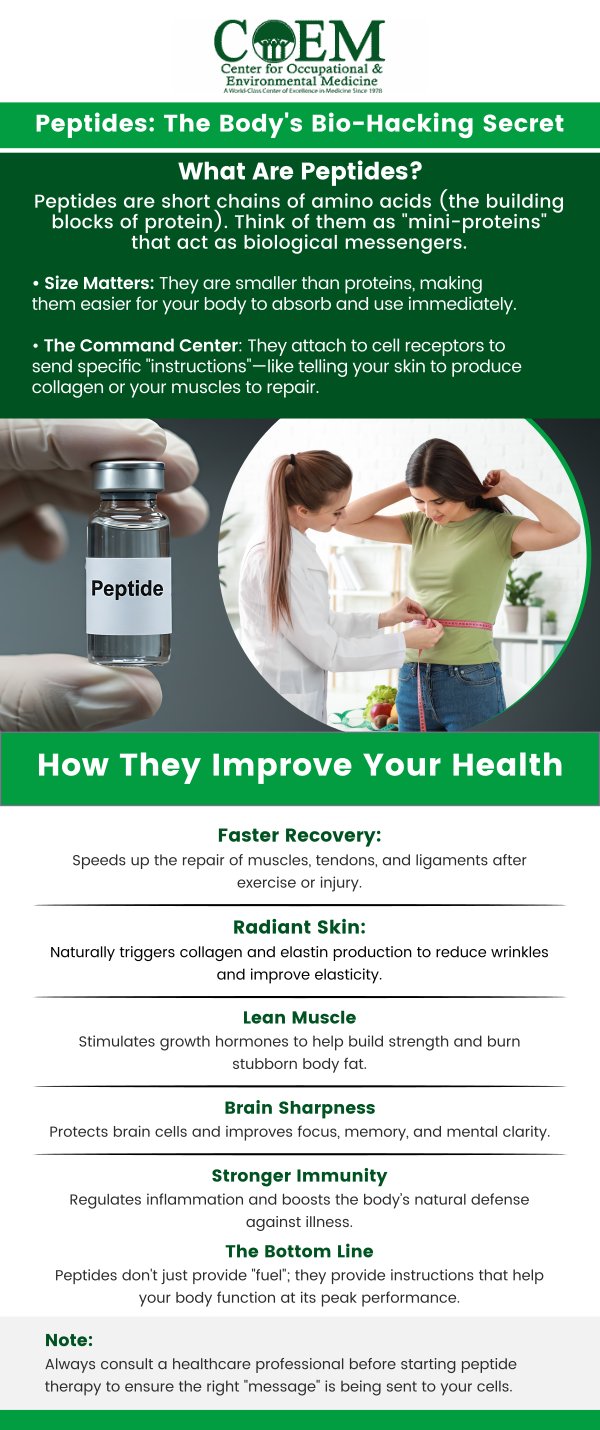
Table of Contents:
What are peptides?
What do peptides do in the body?
What are the benefits of peptide therapy?
Are peptides safe to use?
Discover the Benefits of Peptide Therapy with Dr. William J. Weirs at COEM in Charleston, SC
Peptides are small biological molecules made from short chains of amino acids. Amino acids function as the fundamental components that form proteins in the human body. When several amino acids connect in a specific sequence, they create peptides that act as signaling molecules throughout the body. Within the body, peptides function as messengers that instruct cells to perform particular actions. Certain peptides influence how the body produces hormones, while others help regulate inflammation, metabolism, or cellular regeneration. The body naturally produces many different peptides, each designed to activate very specific receptors and pathways.
Interest in peptides has expanded rapidly as we learn more about their therapeutic potential. Some peptides are used to support metabolic health and weight regulation, including compounds that influence appetite signaling and blood sugar metabolism. Others are studied for their role in muscle repair, skin health, injury recovery, immune function, and cellular regeneration.
Clinicians working within integrative and functional medicine settings have begun incorporating peptide therapies into individualized care strategies. At COEM, treatment plans are guided by a detailed evaluation of the patient’s health status and medical history.
Peptides function as biological signals that guide communication between cells and organ systems. When released within the body, they bind to specific receptors located on cell surfaces. This interaction sends instructions that can influence processes such as hormone production, immune response, metabolism, and tissue repair. The body relies on thousands of these signaling interactions each day to maintain stability across multiple physiological systems. Different peptides influence different pathways. Some regulate metabolic activity and help control how the body processes glucose and energy. Others participate in the repair of muscles, connective tissues, and skin. Certain peptides influence growth hormone signaling, while others assist with immune regulation or inflammatory responses.
Peptides have also gained attention for their role in regulating appetite and metabolic signaling. Certain compounds influence how the brain responds to hunger signals and how the pancreas releases insulin in response to blood sugar levels. This category includes GLP-1-based peptides that have been studied for weight management and metabolic health.
Peptide therapy has become increasingly popular in recent years because of its potential to influence targeted biological pathways involved in health and recovery. These compounds are designed to interact with receptors that regulate specific physiological processes. When used within a medically supervised program, peptide therapies may be considered for metabolic support, tissue repair, immune regulation, and hormone signaling.
Some peptides have been studied for their ability to support weight management and metabolic function. Compounds that influence GLP-1 signaling are widely discussed for their role in appetite regulation and blood sugar metabolism. Other peptides are being explored for their potential to improve muscle recovery, enhance exercise performance, and assist in injury rehabilitation. These therapies are frequently discussed in the context of athletic recovery and regenerative medicine.
Additional areas of interest include skin health, cellular regeneration, and fatigue-related concerns. Certain peptides are studied for their potential to support collagen production and tissue repair, which may influence skin integrity and wound healing. Others may influence growth hormone signaling pathways that contribute to energy production, sleep quality, and physical recovery. Because each peptide interacts with a specific biological receptor, physicians often evaluate how these pathways align with the patient’s health concerns.
At The Center for Occupational and Environmental Medicine (COEM), peptide therapy may be considered as part of a comprehensive treatment plan designed around the individual patient. Their approach integrates conventional medical evaluation with functional medicine principles to ensure that any therapeutic option aligns with the patient’s broader health goals.
The safety of peptide therapy depends on several factors, including the specific compound used, the patient’s medical history, and the manner in which the therapy is prescribed and monitored. Many peptides studied in clinical medicine are designed to mimic naturally occurring signaling molecules found in the human body. Medical supervision is important in determining whether peptide therapy is appropriate for a particular patient. A physician may review laboratory findings, metabolic markers, hormone levels, and existing health conditions before recommending any therapy. Monitoring during treatment allows clinicians to observe how the body responds and make adjustments if necessary.
The collaborative approach at COEM focuses on evaluating each patient’s medical background and determining whether peptide therapy fits safely within an individualized care plan.
At The Center for Occupational and Environmental Medicine (COEM) in Charleston, SC, peptide therapy is integrated into personalized wellness programs designed to support your health and fitness goals. Medical programs that include peptide therapy typically begin with a detailed health evaluation. Dr. William J. Weirs assesses laboratory data, metabolic indicators, hormone levels, and medical history to determine if peptide-based therapies are appropriate. This thorough evaluation ensures that the therapies selected are best aligned with your individual needs. He may also evaluate how peptides could work in conjunction with your other treatments or lifestyle adjustments, ensuring a comprehensive approach to achieving optimal health.
Peptide therapies are often discussed in relation to weight management, fatigue, physical injury recovery, and skin health. Certain peptides help regulate metabolism, while others influence growth hormone signaling or tissue regeneration. These therapies can be a part of a broader wellness plan that includes nutritional advice, exercise regimens, and other medical interventions. By addressing the root causes of health issues at the molecular level, peptide therapy helps enhance long-term vitality and wellness.
Dr. William J. Weirs, a board-certified emergency medicine physician and Fellow in Integrative Medicine, brings a wealth of expertise in both traditional emergency care and integrative medicine. His approach blends conventional medical practices with holistic techniques to optimize overall health and well-being. He focuses on providing a comprehensive view of health, allowing him to treat both immediate health concerns and long-term wellness objectives.
Dr. Weirs provides advanced therapeutic options at COEM, ensuring each patient receives personalized care that incorporates cutting-edge medical advancements, including peptide therapy. Through careful evaluation, ongoing monitoring, and a focus on holistic well-being, Dr. Weirs is committed to helping you achieve your health goals with the best possible outcomes.
Peptide therapy is available at The Center for Occupational and Environmental Medicine (COEM). For more information, contact us today or book an appointment online. We are conveniently located at 7510 North Forest Drive North Charleston, SC 29420. We serve patients from Charleston SC, Mount Pleasant SC, Summerville SC, North Charleston SC, Goose Creek SC, Ladson SC, Hanahan SC, James Island SC, John’s Island SC, Daniel Island SC, West Ashley SC, Moncks Corner SC, Sullivans Island SC, Folly Beach SC, Isle of Palms SC and all of South Carolina, Nationally, and Internationally. Patients routinely fly into Charleston to be evaluated by COEM and to enjoy this beautiful city, which is a Condé Nast and Travel and Leisure Top Domestic and International Tourist Destination.

Check Out Our 5 Star Reviews


Additional Services You May Like
- Functional Medicine
- Allergy and Autoimmunity
- Asthma and COPD
- Autoimmune Diseases
- Allergy and Immunology
- Anti Aging Medicine
- Autism and Children
- ADHD
- Bacterial Infections
- Chemical Toxicity
- Candida Fungal Problems
- Cancer Treatment
- Chronic Illness
- Chronic Inflammatory Response Syndrome (CIRS)
- Chronic Fatigue
- Cardiovascular Disease
- Carbon Monoxide Poisoning
- Chelation Therapy
- Depression
- Environmental Medicine
- Ear Ringing and Dizziness
- Fatigue Treatment
- Fertility and Preconception Care
- Gut Health
- GI 360 Test
- Heavy Metal Toxicity
- Hormonal Imbalances
- Headaches and Migraines
- Hormone Balancing (Men & Women)
- Hepatitis
- Integrative Medicine
- Independent Medical Evaluations
- Influenza
- Lab Testing
- Mold Toxicity
- Malnutrition
- Neurodegenerative Disease
- Natural Hormone Balancing For Women
- Preservative-Free IV Therapy
- Stomach Acid Imbalance
- Smoking Cessation Program
- Skin Therapy (Anti-Aging)
- Swine Flu
- Thyroid
- Mold Toxicity
- Vitamin D
- Weight Loss Program
- Women’s Breast Health Formula
Additional Services You May Like
- Functional Medicine
- Allergy and Autoimmunity
- Asthma and COPD
- Autoimmune Diseases
- Allergy and Immunology
- Anti Aging Medicine
- Autism and Children
- ADHD
- Bacterial Infections
- Chemical Toxicity
- Candida Fungal Problems
- Cancer Treatment
- Chronic Illness
- Chronic Fatigue
- Cardiovascular Disease
- Chronic Inflammatory Response Syndrome (CIRS)
- Carbon Monoxide Poisoning
- Chelation Therapy
- Depression
- Environmental Medicine
- Ear Ringing and Dizziness
- Fatigue Treatment
- Fertility and Preconception Care
- Gut Health
- GI 360 Test
- Heavy Metal Toxicity
- Hormonal Imbalances
- Headaches and Migraines
- Hormone Balancing (Men & Women)
- Hepatitis
- Integrative Medicine
- Independent Medical Evaluations
- Influenza
- Lab Testing
- Mold Toxicity
- Malnutrition
- Neurodegenerative Disease
- Natural Hormone Balancing For Women
- Preservative-Free IV Therapy
- Stomach Acid Imbalance
- Smoking Cessation Program
- Skin Therapy (Anti-Aging)
- Swine Flu
- Thyroid
- Mold Toxicity
- Vitamin D
- Weight Loss Program
- Women’s Breast Health Formula



 VIP Referral
 Send Text
 How May I Help You?